
TL;DR:
- Finnish SMBs can automate transaction imports through bank synchronisation to save time and improve accuracy.
- Open banking APIs and aggregators enable secure, real-time data flow from multiple banks into accounting software.
- Regular maintenance of connections and compliance checks are essential to sustain accurate and trouble-free bank synchronization.
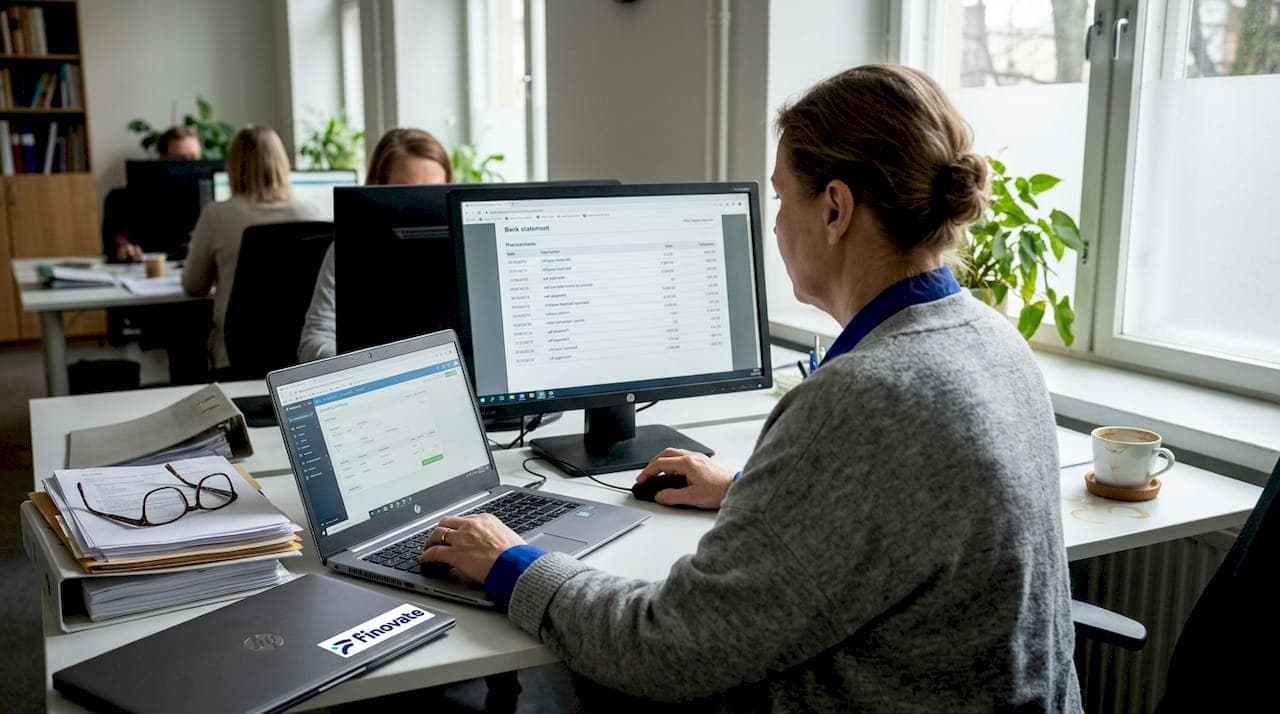
Many Finnish small and medium business owners spend hours each month manually entering bank transactions, chasing receipts, and reconciling accounts. It is a slow, error-prone process that pulls focus away from running your business. The good news is that bank synchronisation automates all of this, and it is neither expensive nor technically complex to set up. Whether you use one bank or several, modern tools built on open banking standards make it straightforward. This article explains how bank synchronisation works, what benefits it delivers, how to choose the right approach, and what compliance requirements apply to Finnish businesses in 2026.
Table of Contents
- What is bank synchronisation and how does it work?
- Key benefits for Finnish SMBs: time savings, accuracy, and control
- Direct integrations vs multi-bank aggregators: what is the best fit?
- Limitations and compliance: what you need to know
- A practical take: what most guides miss on bank synchronisation
- Bank synchronisation streamlined: next steps with Finovate
- Frequently asked questions
Key Takeaways
| Point | Details |
|---|---|
| Automation reduces manual work | Synchronising your bank and accounting systems saves significant time by eliminating data entry and reconciliation tasks. |
| Choose the right sync method | Direct integrations suit single-bank users, while aggregators are ideal for businesses with multiple bank accounts. |
| Watch out for import limits | Automated systems only fetch 90 days of historical data, so plan manual imports if you need older records. |
| Legal representative approval needed | A legal company representative must authorise synchronisation, ensuring both compliance and security. |
What is bank synchronisation and how does it work?
Bank synchronisation is the automated import of your bank transactions, account balances, and payment data directly into your accounting software. Instead of downloading statements manually and uploading them, the connection runs in the background and keeps your books current without your involvement.
The technology behind this is called PSD2, which stands for the Second Payment Services Directive. It is an EU regulation that requires banks to open their data to authorised third-party providers through secure application programming interfaces, or APIs. In Finland, corporate banking APIs from major banks like OP Financial Group and Aktia enable automated transaction imports, payment initiation, and real-time balance updates into accounting platforms such as Netvisor (Visma), Procountor (Finago), and Fennoa.
Here is how the data typically flows:
- Your bank holds your transaction data securely
- An aggregator or direct API connection requests that data with your consent
- The data is passed into your accounting software automatically
- Your bookkeeper or accountant sees up-to-date records without manual input
Aggregators are platforms that sit between banks and accounting software. Rather than connecting to each bank individually, you connect once to the aggregator. Aggregators like Enable Banking, Tink, and Tietoevry harmonise APIs from over 2,500 EU banks, including Finnish institutions like OP and Aktia, enabling real-time synchronisation of transactions across multiple accounts.
This matters for accounting services for Finnish SMBs because it removes a significant manual workload and reduces the risk of data entry errors. The result is cleaner books and faster streamlining of reconciliations at month-end.
You can also review Aktia Open Banking information to understand how one of Finland's key banks approaches open data sharing.
| Method | How it connects | Best for |
|---|---|---|
| Direct API | Bank to software, one bank at a time | Single-bank businesses |
| Aggregator | One platform connects multiple banks | Multi-bank businesses |
| Manual file import | CSV or XML upload by user | Older data or unsupported banks |
Pro Tip: If your business holds accounts at more than one Finnish bank, use a multi-bank aggregator. It saves you from managing separate connections and reduces the risk of missing transactions.
Key benefits for Finnish SMBs: time savings, accuracy, and control
Now that you know what bank synchronisation is, let us look at why it makes a genuine difference for Finnish SMB owners. The benefits are practical and measurable.
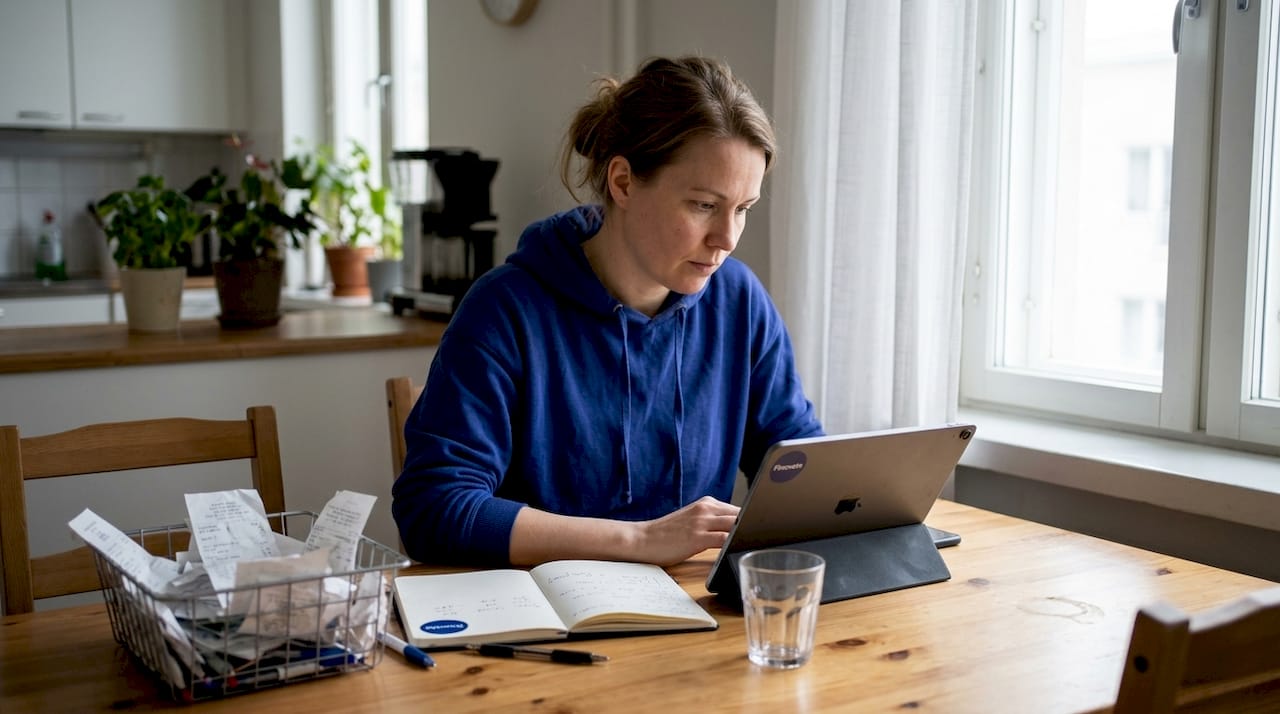
Netvisor serves over 45,000 customers with integrations for bank statements, payments, and real-time balances. That scale tells you something important: this is not a niche tool for large corporations. It is already the standard for tens of thousands of Finnish businesses of all sizes.
The three core benefits are:
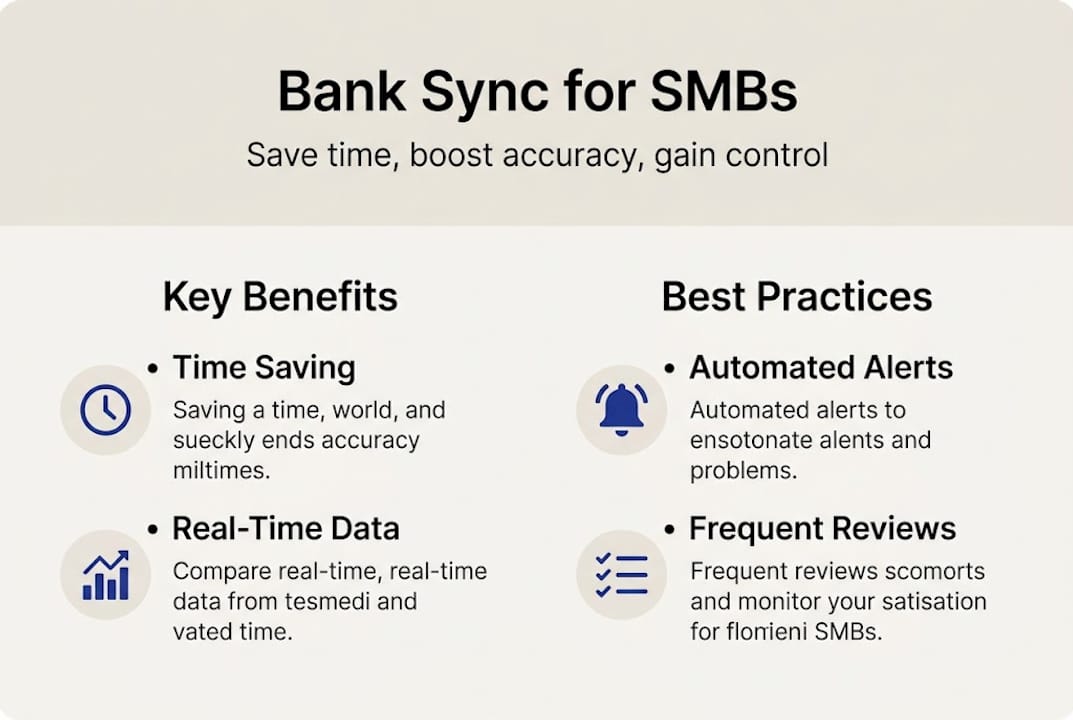
- Time savings: Automated imports eliminate the need to download, format, and upload bank statements. For most SMBs, this frees up several hours per month that are better spent on actual business decisions.
- Reduced errors: Manual data entry introduces mistakes. A mistyped figure or a missed transaction can distort your profit figures and complicate your tax filing. Automated time savings, error reduction, and real-time visibility address all three of these risks simultaneously.
- Real-time financial insight: With live balance data flowing into your accounting software, you can see your cash position at any moment. This is especially valuable when managing invoices, payroll, or VAT obligations.
For Finnish SMBs, accurate real-time data also supports better decisions around growth. When your books reflect reality rather than last week's manual entry, you can act faster and with more confidence. This has a direct impact on business growth over time.
Good bookkeeping best practices always start with reliable data. Bank synchronisation is the most effective way to ensure that reliability without adding to your workload.
You can also explore Tink open banking as one of the leading aggregator platforms available to Finnish businesses.
Pro Tip: Set up automated alerts for failed sync attempts in your accounting software. Catching a broken connection early means you avoid gaps in your transaction history that are tedious to fill in later.
Direct integrations vs multi-bank aggregators: what is the best fit?
Let us get concrete. Should you connect each bank separately, or use a tool that covers them all?
The answer depends on your business structure. Here is a simple guide:
- You use one bank: A direct integration through your bank's own API is usually sufficient. It is straightforward, often lower in cost, and provides a tight connection between your bank and your accounting software. OP's self-service API is a good example of this approach.
- You use multiple banks: An aggregator is the better choice. Managing separate connections for each bank adds complexity and increases the chance of missed transactions or authorisation lapses.
- You are comparing software platforms: Look at automation depth, not just connectivity. Netvisor and Procountor both offer strong bank integrations, but they differ in workflow features, pricing models, and the level of automation they provide for reconciliation.
Netvisor is often preferred by businesses that want deep automation and a Finnish-first platform. Procountor suits businesses that need strong payroll integration alongside accounting. Both platforms support direct and aggregator-based bank connections.
You should also review the service provider mandate requirements if you are connecting through OP, as third-party software providers must be authorised before the connection goes live.
| Feature | Direct integration | Multi-bank aggregator |
|---|---|---|
| Number of banks | One | Multiple |
| Setup complexity | Low | Low to medium |
| Cost | Often lower | Subscription-based |
| Compliance handling | Bank-managed | Aggregator-managed |
| Best use case | Single-bank SMBs | Multi-bank or growing businesses |
Understanding essential Finnish accounting rules will help you make an informed choice, particularly around record-keeping obligations that your synchronisation method must support. You can also review bookkeeping basics to ensure your setup aligns with Finnish statutory requirements.
Limitations and compliance: what you need to know
Even the best automation has its quirks, and bank synchronisation is no exception. Knowing the limitations upfront helps you avoid surprises.
Here are the main constraints and compliance requirements to be aware of:
- 90-day historical limit: Most automated bank connections only retrieve transactions from the past 90 days. If you need older data, you must use a manual file import, typically in XML or CSV format, into your accounting software.
- Same-day transactions: Same-day transactions require manual XML import and are not visible until the next scheduled sync. If you need accurate daily books, plan for a manual override on days when timing is critical.
- Legal representative authentication: Bank synchronisation cannot be activated by just any staff member. The legal representative of your business must authorise the connection. This is a regulatory requirement, not a software limitation.
- PSD2 and eIDAS compliance: Aggregators manage compliance with PSD2 and eIDAS (the EU regulation governing electronic identification and trust services). This means you do not need to handle this yourself, but you should confirm your aggregator is certified.
- AI-assisted reconciliation: AI use for bank reconciliation is rising among Finnish financial sector firms. This is a positive development, but it does not remove the need for human review.
A common mistake is assuming that bank synchronisation runs flawlessly once set up. In practice, connections can lapse after consent periods expire, banks update their APIs, or software is upgraded. Regular checks are essential.
For a thorough overview of what compliance for SMEs requires in Finland, including record retention and authorisation rules, it is worth reviewing your obligations before going live. You can also consult the compliance basics guide for a broader regulatory context.
A practical take: what most guides miss on bank synchronisation
With the technical facts covered, here is what we have learnt through years of working with Finnish SMBs.
Most articles focus on the setup process and stop there. But the real challenge is maintenance. Bank synchronisation is not a one-time task. Consent periods expire, typically every 90 days under PSD2 rules. If you do not renew them, your sync stops silently and your books fall behind without any obvious warning.
The PSD2 legal representative approval requirement also catches businesses off guard. If the authorised signatory changes, all existing bank connections must be re-authorised. We have seen businesses lose weeks of automated imports because a company restructure was not reflected in their banking authorisations.
AI-assisted reconciliation is genuinely promising, and Finnish firms are already adopting it. But even the best AI flags exceptions for human review. Your accountant still needs to see the data, and your sync logs still need to be checked.
If you switch banks, review every software connection and authorisation before closing your old account. Migrating accounts without updating your accounting software is one of the most avoidable sources of bookkeeping errors we encounter.
Pro Tip: Review your sync logs at least once a fortnight. Catching a lapsed connection early is far easier than reconstructing missing transaction data later. See our guide on optimising your bookkeeping workflow for a practical routine you can follow.
Bank synchronisation streamlined: next steps with Finovate
Ready to put this knowledge to work in your business? Here is how you can get started with bank synchronisation, backed by expert support.
At Finovate, we help Finnish SMBs choose and configure the most efficient bank synchronisation setup for their specific situation. Whether you need a direct bank connection or a multi-bank aggregator, our accounting experts can guide you through the process and ensure your books remain accurate and compliant. Explore our Finovate accounting services to see how we support businesses like yours. You can also browse our full range of Finovate products, including our monthly invoicing service, designed to simplify financial management for Finnish entrepreneurs and growing businesses.
Frequently asked questions
How long does it take to activate bank synchronisation for my business?
Most systems are live within one business day after the legal representative completes the bank consent and authorisation process.
Can I synchronise accounts from multiple Finnish banks at once?
Yes, multi-bank aggregators like Enable Banking or Tink let you connect several Finnish and EU bank accounts through a single platform, simplifying management considerably.
What if I need to import transactions from more than 90 days ago?
Transactions older than 90 days fall outside the automated sync window and must be imported manually using a file format such as XML or CSV.
Is bank synchronisation secure and compliant in Finland?
Yes, it relies on PSD2-compliant APIs with strong customer authentication, and aggregators hold eIDAS certification to ensure regulatory compliance across the EU.