

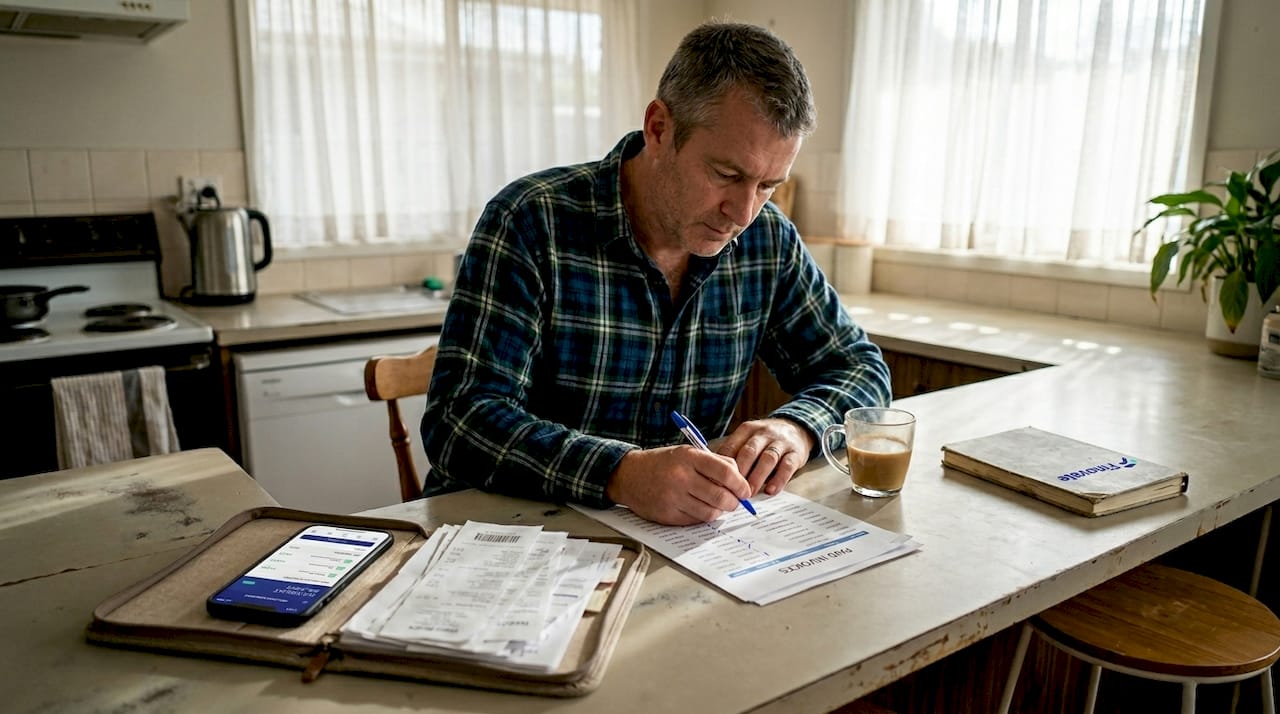
70% of small businesses fail due to poor financial management, and that figure should give every Finnish entrepreneur pause. Bookkeeping is not just an administrative chore. It is the foundation that keeps your business financially healthy, legally compliant, and positioned for growth. Whether you are a sole trader, a light entrepreneur, or running a limited company, understanding the basics of bookkeeping will help you make better decisions, avoid costly mistakes, and stay on the right side of Finnish tax law. This guide walks you through everything you need to know to get started with confidence.
Table of Contents
- What is bookkeeping and why does it matter?
- Key bookkeeping tasks every Finnish entrepreneur should know
- Common bookkeeping methods: Cash vs. accrual and the Profit First approach
- Setting up your bookkeeping: Simple steps for Finnish small businesses
- Mistakes to avoid and habits for easier bookkeeping
- Professional support for streamlined bookkeeping in Finland
- Frequently asked questions
Key Takeaways
| Point | Details |
|---|---|
| Bookkeeping is essential | Accurate bookkeeping is a key factor in keeping your business running and compliant in Finland. |
| Choose the right method | Selecting a suitable bookkeeping method helps you manage cash flow and finances efficiently. |
| Good habits prevent errors | Regular updates and separating business from personal records will make your bookkeeping easier and less stressful. |
| Professional help saves time | Hiring an expert can simplify processes and lower your risk of costly mistakes. |
What is bookkeeping and why does it matter?
Bookkeeping is the systematic process of recording every financial transaction your business makes. Every sale, every purchase, every payment in and out — all of it needs to be documented accurately and consistently. It is the raw data layer of your financial management.
Many people confuse bookkeeping with accounting, but they are distinct activities. Bookkeeping captures the data. Accounting then analyses and interprets that data to support decisions, prepare tax returns, and produce financial reports. Think of bookkeeping as the foundation and accounting as the structure built on top of it.
For Finnish small businesses, proper bookkeeping is not optional. Finnish law requires businesses to maintain accurate financial records, and failure to do so can result in penalties, tax complications, and difficulties during audits. Beyond legal compliance, good bookkeeping gives you a clear picture of your cash flow, profitability, and financial position at any given time.
Here is what solid bookkeeping supports:
- Cash flow visibility: You always know what money is coming in and going out.
- Tax accuracy: Your VAT returns and income tax filings are based on reliable data.
- Business decisions: You can identify which products or services are profitable.
- Audit readiness: Your records are organised and accessible if the tax authority requests them.
- Investor or lender confidence: Clean books make it easier to secure financing.
"Businesses that maintain accurate financial records are significantly better positioned to survive economic uncertainty and scale sustainably." This is why accounting services in Finland are in high demand among entrepreneurs who want to grow without the financial guesswork.
If you are operating as a light entrepreneur, the bookkeeping requirements may differ slightly, but the principles remain the same. You can learn more about accounting for light entrepreneurs to understand what applies to your specific situation.
Key bookkeeping tasks every Finnish entrepreneur should know
Once you understand what bookkeeping is, the next step is knowing what it actually involves on a day-to-day basis. These are the core tasks you will need to manage or delegate:
- Recording transactions: Every sale and expense must be logged promptly. Delays lead to errors and missing data.
- Tracking invoices and receipts: Keep a record of every invoice you issue and every receipt you receive. This is essential for VAT reporting.
- Reconciling accounts: Regularly compare your bookkeeping records against your bank statements to catch discrepancies early.
- Managing payroll: If you have employees, you must record wages, employer contributions, and withholding taxes accurately.
- VAT reporting: In Finland, most businesses must file VAT returns, typically monthly or quarterly. Your records must support every figure you report.
- Preparing for annual accounts: Your bookkeeping records feed directly into your annual financial statements and tax return.
Staying on top of these tasks reduces stress significantly at year end. Many Finnish entrepreneurs also find it helpful to review tax tips for Finnish entrepreneurs alongside their bookkeeping routine to ensure nothing is missed.
Pro Tip: Use digital bookkeeping software to automate transaction imports from your bank account. This reduces manual entry errors and saves hours each month. Pairing good software with reliable invoicing solutions for small businesses creates a streamlined financial workflow from the moment a sale is made.
The poor financial management that causes so many business failures often starts with neglecting these basic tasks. Staying consistent is more important than being perfect.
Common bookkeeping methods: Cash vs. accrual and the Profit First approach
Not all bookkeeping works the same way. There are different methods for recording transactions, and choosing the right one for your business matters.
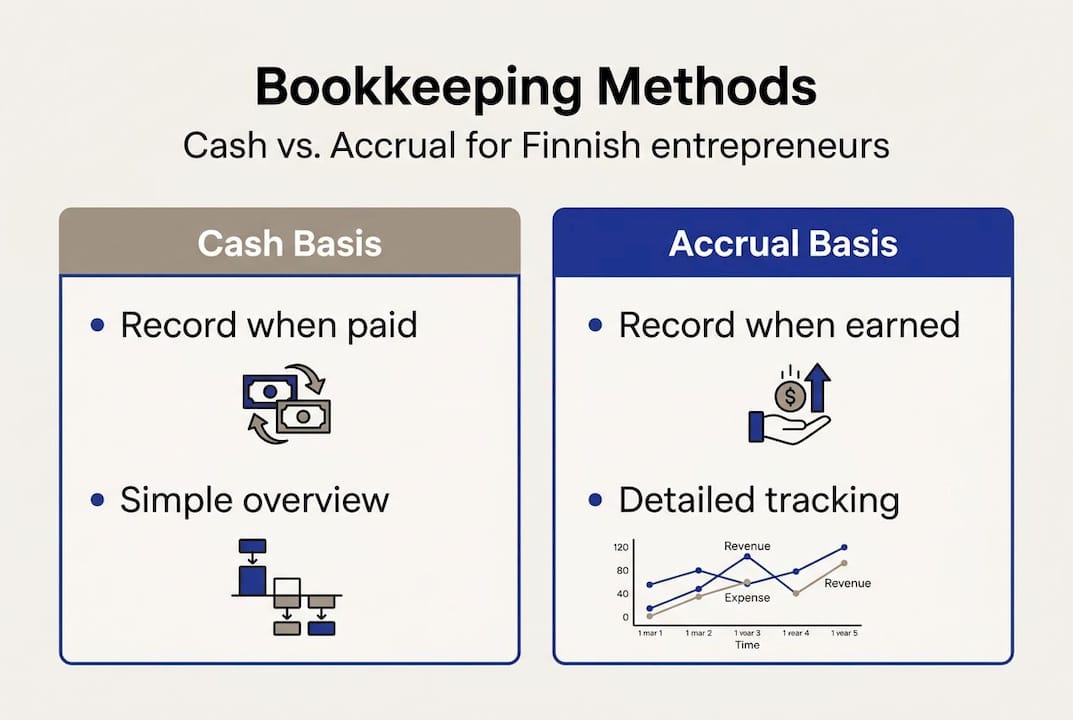
Cash basis bookkeeping records income when money is received and expenses when they are paid. It is straightforward and easy to manage, making it popular with sole traders and small businesses with simple finances.
Accrual basis bookkeeping records income when it is earned and expenses when they are incurred, regardless of when cash changes hands. This gives a more accurate picture of your financial position, especially if you have outstanding invoices or upcoming liabilities.
There is also the Profit First method, which allocates profit first before covering expenses. For example, you might set aside 5% as profit and 50% for owner pay immediately upon receiving revenue. This approach helps business owners avoid the trap of spending everything that comes in and then wondering why there is nothing left.
| Method | Best for | Key advantage | Key limitation |
|---|---|---|---|
| Cash basis | Sole traders, simple businesses | Easy to manage | Can misrepresent timing of income |
| Accrual basis | Growing businesses, limited companies | Accurate financial picture | More complex to maintain |
| Profit First | Cash-conscious entrepreneurs | Builds profit discipline | Requires multiple bank accounts |
Here is a quick summary of when each method suits Finnish businesses:
- Cash basis: Ideal if your transactions are straightforward and you want simplicity.
- Accrual basis: Better if you invoice clients and have a gap between earning and receiving payment.
- Profit First: Useful if you struggle with cash management and want a structured approach to profitability.
Pro Tip: If you run a limited company in Finland, accrual basis is typically required. Review the specific requirements for accounting for limited companies to ensure you are using the correct method from the start.
Setting up your bookkeeping: Simple steps for Finnish small businesses
Getting your bookkeeping set up correctly from the beginning saves considerable time and effort later. Here is a practical sequence to follow:
- Open a dedicated business bank account: Never mix personal and business finances. A separate account makes reconciliation straightforward and keeps your records clean.
- Choose your bookkeeping method: Based on your business type and complexity, decide whether cash or accrual basis suits you best.
- Select your tools or partner: Decide whether you will use software, hire a professional, or combine both approaches.
- Set up a filing system: Whether digital or physical, organise your invoices, receipts, and bank statements by month and category.
- Establish a routine: Set aside time each week to update your records. Consistency prevents backlogs.
Here is a comparison of the main bookkeeping solutions available to Finnish entrepreneurs:
| Solution | Cost level | Effort required | Best suited for |
|---|---|---|---|
| DIY software (e.g., Procountor, Netvisor) | Low to medium | High | Tech-savvy sole traders |
| Hiring an accountant | Medium to high | Low | Businesses with complex needs |
| Hybrid model (software + professional support) | Medium | Medium | Growing small businesses |
| Outsourced bookkeeping service | Medium | Very low | Entrepreneurs short on time |
The poor financial management that leads to business failure is often avoidable with the right setup. Choosing professional bookkeeping services early on can prevent costly errors and free you to focus on running your business.
Mistakes to avoid and habits for easier bookkeeping
Even with the best intentions, certain mistakes appear repeatedly among small business owners. Knowing what to watch for puts you ahead.
The most common bookkeeping mistakes include:
- Mixing personal and business finances: This creates confusion, complicates tax filings, and can raise red flags during audits.
- Falling behind on records: Letting transactions pile up makes reconciliation harder and increases the risk of errors.
- Losing receipts: Without documentation, you cannot claim expenses or defend your figures to the tax authority.
- Ignoring bank reconciliation: Skipping this step means errors can go undetected for months.
- Misclassifying expenses: Putting costs in the wrong category distorts your financial picture and can affect your tax position.
Building good habits is the antidote to all of these. Schedule a weekly bookkeeping session, even if it is just 30 minutes. Store receipts digitally as soon as you receive them. Review your accounts monthly, not just at year end.
"The businesses that struggle most with financial management are often those that treat bookkeeping as an afterthought rather than a core business activity."
Reviewing essential tax tips for entrepreneurs alongside your bookkeeping routine helps you stay compliant and identify opportunities to manage your tax position effectively. The risk of financial mismanagement is real, but it is entirely preventable with consistent habits and the right support.
Professional support for streamlined bookkeeping in Finland
Managing your own bookkeeping is achievable, but there comes a point where professional support pays for itself many times over. Accurate records mean fewer errors, fewer penalties, and more time for you to focus on what you do best.
At Finovate, we offer bookkeeping and accounting services tailored to the needs of Finnish entrepreneurs at every stage. Whether you are a light entrepreneur looking for a straightforward monthly invoicing service or a growing limited company in need of full accounting for limited companies, we have a solution that fits. Our team handles the detail so you can focus on your business with confidence. Explore the full range of expert accounting services we provide and find the right level of support for where you are today.
Frequently asked questions
What is the main difference between bookkeeping and accounting?
Bookkeeping records daily transactions, while accounting analyses and interprets that data for key business decisions. Both are essential, but they serve different purposes in your financial management.
Do I need to use special software for bookkeeping in Finland?
Many small businesses use digital tools, but you may keep manual records as long as you follow Finnish legal requirements. Software does, however, make the process significantly faster and less error-prone.
How often should I update my financial records?
You should record transactions at least weekly to maintain accuracy and reduce end-of-year stress. Keeping records up to date is one of the most effective ways to avoid financial management errors.
What are the risks of poor bookkeeping?
Inaccurate records can cause cash flow problems, compliance issues, and even business failure. 70% of small businesses fail due to poor financial management, making this a risk worth taking seriously.
When does it make sense to hire a professional bookkeeper?
Consider professional support once transactions become complex or you need more time to focus on running your business. Early investment in professional help often prevents far more costly problems down the line.