
Finland leads Europe in digital accounting, with ~90% e-invoicing adoption already embedded in business practice. Yet many small and medium-sized business owners still treat accounting as a manual chore, spending hours on tasks that modern tools handle in minutes. The gap between what is possible and what most SMEs actually do remains surprisingly wide. This guide cuts through the confusion and shows you exactly what digital accounting involves, why it matters for your business, and how to move from outdated processes to a system that saves time, reduces costs, and gives you sharper financial insight.
Table of Contents
- What is digital accounting and why does it matter for SMEs?
- How digital accounting transforms financial processes
- Adoption trends: How Finnish SMEs lead in digitalisation
- Steps to implementing digital accounting in your business
- The overlooked advantage: Using digital accounting as a strategic business driver
- Take your next step with expert digital accounting support
- Frequently asked questions
Key Takeaways
| Point | Details |
|---|---|
| Efficiency boost | Digital accounting automates routine processes, significantly reducing manual work for SMEs. |
| Cost savings | Structured data and cloud solutions help cut operational expenses and minimise errors. |
| Real-time insights | Businesses gain immediate access to financial data for quicker, better decisions. |
| Strategic advantage | Using digital accounting proactively offers a platform for growth, not just compliance. |
What is digital accounting and why does it matter for SMEs?
Digital accounting is the use of cloud-based software, automation, and structured data to manage your financial records and reporting. It replaces paper invoices, manual spreadsheets, and disconnected filing systems with a single, connected workflow. For Finnish SMEs, this is not a future trend. It is the current standard.
At its core, digital accounting covers several key functions:
- Automated invoicing: Sales invoices are created, sent, and tracked without manual input at each step.
- Expense management: Receipts are captured digitally and matched to the correct accounts automatically.
- Cloud-based reporting: Financial statements and VAT reports are generated in real time, accessible from any device.
- Structured data exchange: Information moves between your systems and your accountant or tax authority without re-entry.
The accounting services for SMEs that deliver the most value are built on exactly these foundations. As research confirms, automation of core processes such as sales to cash, purchase to pay, payments, general ledger, and reporting via intelligent automation and AI reduces manual entry and the errors that come with it.
For SMEs, the direct advantages are tangible. You spend less time on repetitive data entry. Your records are always up to date, which means fewer surprises at tax time. Scaling your business does not require hiring additional administrative staff just to keep up with paperwork.
"The shift to digital accounting is not about replacing your accountant. It is about giving both you and your accountant better tools to work with."
Good bookkeeping best practices start with choosing the right digital foundation. Once that is in place, everything else becomes easier to manage and easier to audit.
Pro Tip: If you are unsure where to start, check whether your current accounting software supports structured e-invoicing (Finvoice or PEPPOL formats). If it does not, that is your first upgrade to consider.
How digital accounting transforms financial processes
Once you understand the basics, the true power of digital tools comes into focus when you see how they reshape everyday business routines. The change is not just about speed. It is about eliminating entire categories of error and delay.
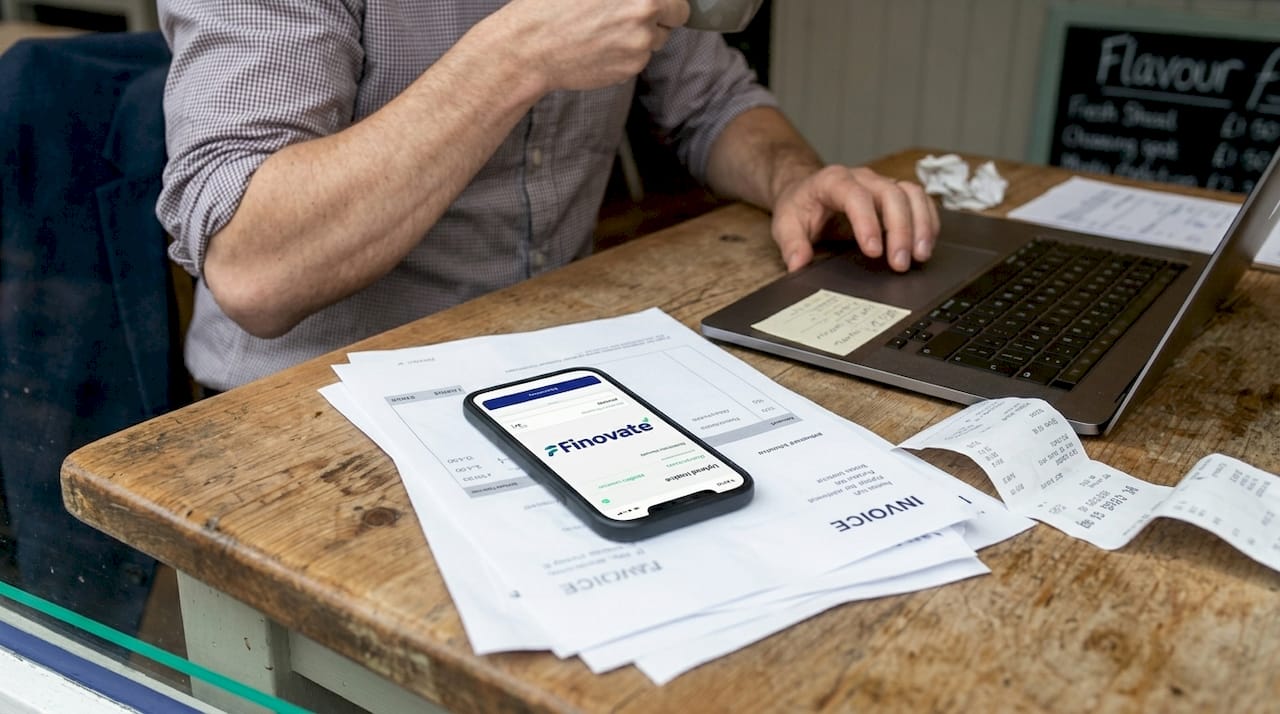
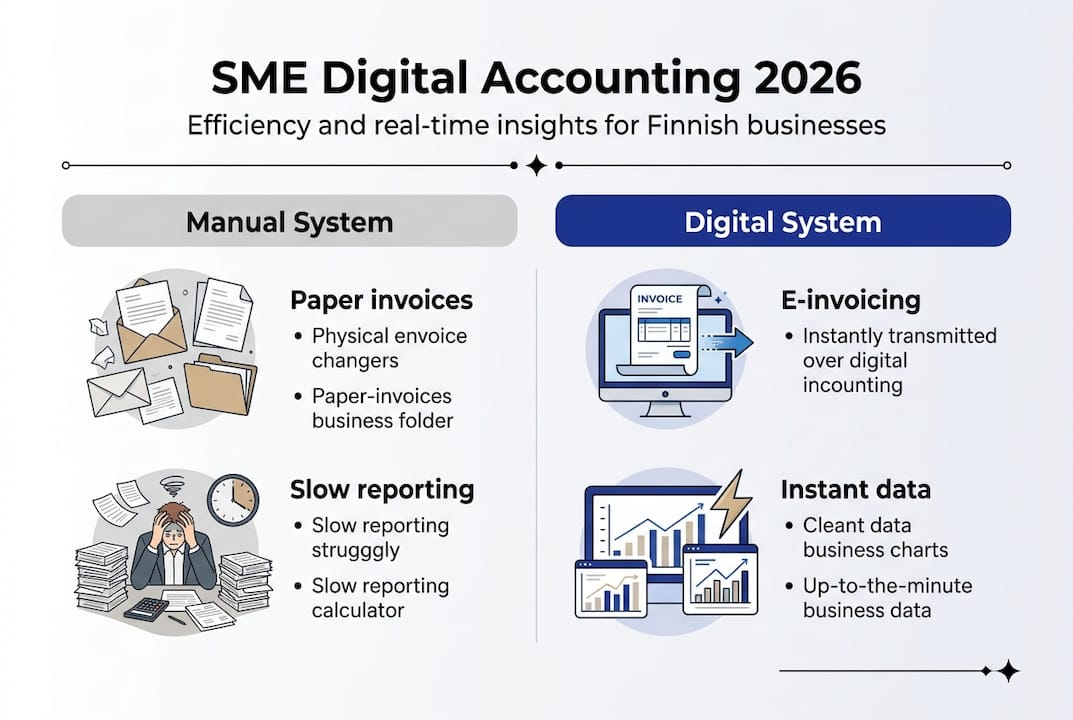
Consider two common workflows: sales to cash and purchase to pay. In a manual system, each step requires human intervention. In a digital system, structured data flows automatically between stages.
| Process step | Manual approach | Digital approach |
|---|---|---|
| Invoice creation | Typed manually, emailed as PDF | Auto-generated from sales order, sent as structured e-invoice |
| Payment matching | Checked manually against bank statement | Matched automatically via bank integration |
| Expense recording | Paper receipts, manual entry | Receipt photo captured, auto-coded to correct account |
| VAT reporting | Compiled from spreadsheets | Generated automatically from live data |
| Financial reporting | Monthly, after manual reconciliation | Real time, always current |
The impact on decision-making is significant. When your numbers are always current, you can spot a cash flow issue before it becomes a crisis. You can see which clients pay late and act accordingly. Automation of general ledger and reporting removes the lag between activity and insight.
Here is a practical sequence for how digital tools improve your financial workflow:
- A sale is made and an invoice is generated automatically from your system.
- The invoice is sent in structured format and received directly into the client's accounting software.
- Payment is received and matched to the invoice without manual reconciliation.
- The transaction updates your general ledger and VAT records in real time.
- Your accountant reviews accurate, complete data rather than correcting entry errors.
When you automate bookkeeping at this level, the time savings compound quickly. Hours spent on data entry each month become minutes. That time goes back into running your business.
Pro Tip: Ask your accountant to review your chart of accounts before you go digital. Cleaning up your account categories in advance prevents messy data from carrying over into your new system.
Understanding the different accounting methods in Finland also helps you configure your digital tools correctly from the outset, particularly around accrual versus cash-basis reporting.
Adoption trends: How Finnish SMEs lead in digitalisation
With practical benefits clear, it is important to see where Finnish SMEs stand today and why staying at the forefront of adoption matters for your competitive position.
Finland is a recognised leader in business digitalisation across Europe. The figures are striking. Finland achieves 90% structured e-invoicing adoption and over 80% advanced technology use among SMEs, well above the EU average.
| Metric | Finland | EU average |
|---|---|---|
| Structured e-invoicing adoption | ~90% | ~55% |
| SMEs using advanced digital tools | ~80% | ~55% |
| Cloud accounting usage | High | Moderate |
These numbers matter for several reasons:
- Supplier and client expectations: Finnish businesses increasingly expect to receive and send structured invoices. If your system cannot handle this, you create friction in your relationships.
- Regulatory alignment: Finnish tax authorities and Kela are moving towards digital-first reporting. Being ahead of this curve reduces compliance risk.
- Cost competitiveness: SMEs using digital tools consistently report lower administrative costs per transaction than those relying on manual processes.
- Access to real-time data: EU digital adoption statistics confirm that digitally mature businesses make faster, better-informed decisions.
The gap between Finnish SMEs and the EU average is not accidental. Finland has invested heavily in digital infrastructure and public sector digitalisation, which has pulled private sector adoption upward. Businesses that outsource bookkeeping to specialist providers often benefit from this infrastructure directly, as their service providers are already fully integrated into digital reporting channels.
If your business is still in the minority that relies on manual or semi-digital processes, you are not just missing efficiency gains. You are also making it harder to grow, collaborate, and compete.
Steps to implementing digital accounting in your business
Armed with an understanding of digital accounting's impact and the context of Finland's leadership, here is how you can apply these lessons to your own business.
Implementation does not need to be disruptive. A structured approach reduces risk and makes the transition manageable.
- Assess your current state. Map out which processes are manual, which are partially digital, and which are already automated. Research suggests that assessing 11 key dimensions from initial to continuous improvement gives a clear picture of where you stand.
- Choose the right platform. Select cloud-based accounting software that supports Finnish e-invoicing standards (Finvoice or PEPPOL) and integrates with your bank.
- Migrate your data carefully. Export historical records cleanly before switching systems. Agree with your accountant on a cut-off date to avoid duplicate entries.
- Train your team. Even simple systems require a short learning period. Allocate time for this before going live.
- Connect your key integrations. Link your accounting software to your bank, payroll system, and invoicing tools.
- Review and refine. After one full month, review what is working and what needs adjustment.
Common pitfalls to avoid:
- Skipping the data migration review, which leads to duplicate or missing records.
- Choosing software based on price alone without checking Finnish compliance features.
- Failing to update your processes after implementation, so staff revert to old habits.
Reviewing bookkeeping basics in Finland before you start will help you set up your chart of accounts correctly. If you have employees, ensure your payroll services for SMEs are also integrated into your digital system from the outset.
Pro Tip: Run your old and new systems in parallel for one month. This gives you a safety net while you build confidence in the new setup.
The overlooked advantage: Using digital accounting as a strategic business driver
Most conversations about digital accounting focus on efficiency and cost reduction. Those benefits are real, but they are not the most important reason to make the switch. The bigger opportunity is what the data tells you once it is clean, current, and structured.
Digital accounting optimises SME operations through automation and real-time insights, and it is the real-time insight part that most business owners underuse. When you can see your gross margin by product line, your cash flow projection for the next 90 days, and your largest cost drivers at a glance, you make different decisions. Bolder ones. Faster ones.
We see this regularly with SMEs that move from manual to digital systems. The first reaction is relief at the time saved. The second, a few months later, is surprise at what the numbers reveal. A service that looked profitable turns out to have high hidden costs. A client segment that seemed small is actually your best margin contributor.
This is why we believe the role of tax advisors and accountants shifts in a digital environment. They stop being data processors and start being strategic partners. That shift only happens when the data is reliable and accessible. Digital accounting makes it possible. The SMEs that treat it as a strategic tool, rather than just an administrative upgrade, are the ones that pull ahead.
Take your next step with expert digital accounting support
If you are ready to transform your financial management with trusted support, here is where Finovate can help.
At Finovate, we provide expert accounting services tailored specifically for Finnish SMEs, covering bookkeeping, tax planning, payroll, and business advisory. Whether you are just starting to digitalise or looking to optimise an existing system, we help you move from manual processes to efficient, compliant digital workflows. Our invoicing service is designed for light entrepreneurs and small businesses that need a straightforward, affordable way to handle invoicing without the administrative burden. We handle the complexity so you can focus on running your business.
Frequently asked questions
What are the main features of digital accounting?
The main features include automation of bookkeeping, digital invoicing, cloud-based reporting, and real-time financial data access. Specifically, core process automation covers sales to cash, purchase to pay, payments, general ledger, and reporting via intelligent automation and AI.
How widespread is digital accounting adoption among Finnish SMEs?
Nearly 90% of Finnish SMEs use structured e-invoicing and over 80% employ advanced cloud or AI solutions, placing Finland well above the EU average.
What is the first step for SMEs to implement digital accounting?
Assess your current processes and choose a cloud-based accounting platform suitable for Finnish regulation and your business size. Maturity models recommend assessing 11 key dimensions from initial adoption to continuous improvement.
How does digital accounting save money for SMEs?
It reduces manual data entry, minimises errors, and enables faster, more accurate financial reporting. Automation and cost reduction work together to lower the administrative cost per transaction significantly compared to manual methods.