
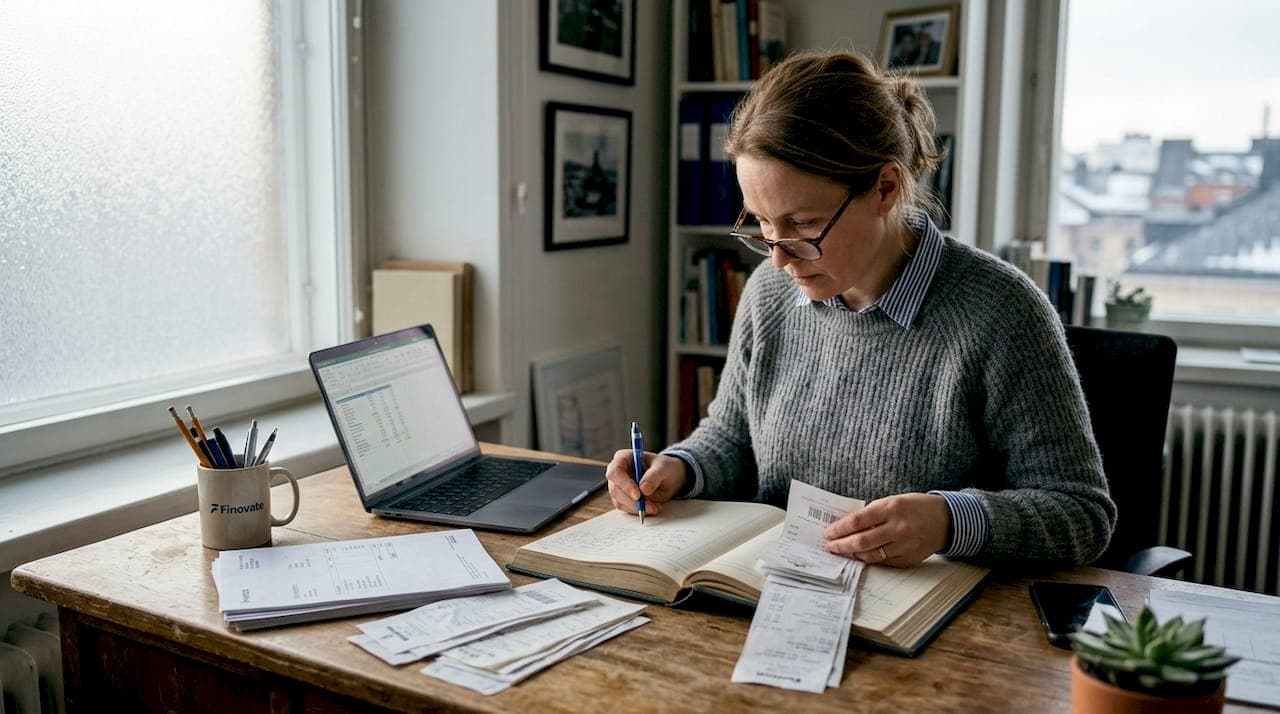
Keeping your books in order is one of the most important responsibilities you carry as a small business owner in Finland. All companies must keep accounts, and management is directly responsible for compliance. Yet many owners find themselves juggling daily operations alongside financial record keeping, often without formal training. This article gives you a practical, expert-backed blueprint covering the core best practices, the right tools, and the key decisions that will keep your business compliant and financially healthy throughout 2026.
Table of Contents
- Set up your bookkeeping for Finnish compliance
- Key bookkeeping best practices for small businesses
- Digital tools and automation: streamline your bookkeeping
- Monitor key financial ratios and reports
- When to seek professional help with your bookkeeping
- Bookkeeping methods compared: single-entry vs double-entry
- Next steps: make bookkeeping effortless with expert support
- Frequently asked questions
Key Takeaways
| Point | Details |
|---|---|
| Choose the right method | Double-entry is mandatory for most, but single-entry works for simple, small businesses. |
| Keep records clear | Store all receipts, classify transactions properly, and separate business from personal expenses. |
| Leverage digital tools | Using cloud software streamlines compliance, automates invoicing, and saves time. |
| Track KPIs monthly | Regularly monitor financial ratios and reports to spot business trends early. |
| Seek expert help if unsure | A qualified accountant ensures compliance, prevents errors, and gives valuable strategic advice. |
Set up your bookkeeping for Finnish compliance
With the importance established, let us break down the core compliance criteria every Finnish business should assess first. The legal structure of your business determines your bookkeeping obligations. Limited companies, partnerships, and cooperatives must use double-entry bookkeeping without exception. Sole proprietors, however, may use single-entry bookkeeping if they remain below certain thresholds.
Double-entry is mandatory for companies and for sole proprietors who meet any of the following criteria:
- Balance sheet total exceeds €100,000
- Annual turnover exceeds €200,000
- Average number of employees is more than three
If you fall below all three thresholds, single-entry may be permissible. However, double-entry gives you far richer financial insight, which is why many micro businesses choose it voluntarily.
"Management is responsible for ensuring that the company's accounting complies with the law." This is not a guideline. It is a legal obligation that applies to every Finnish business owner.
Business owners who lack accounting expertise should seriously consider outsourcing. Professional accounting services for small businesses reduce the risk of errors and free you to focus on growth. If you prefer to manage it yourself, a clear step-by-step bookkeeping process will help you stay on track.
Pro Tip: Even if you are below the double-entry threshold, adopting it early makes the transition seamless when your business grows.
Key bookkeeping best practices for small businesses
Once you have set up a compliant foundation, here is a checklist of practical steps to strengthen your daily bookkeeping.
- Collect and store all source documents. Dated, numbered receipts and supporting documents must be retained for the statutory period, which is generally six years after the end of the financial year.
- Record transactions promptly. Delays create errors. Enter every sale, purchase, and payment as soon as it occurs.
- Classify income and expenses correctly. Accurate classification is essential for VAT reporting and tax returns. Misclassification is one of the most common audit triggers.
- Separate business and personal finances. Proper separation of business and personal assets is essential and protects you legally as well as financially.
- Track fixed assets and depreciation. Record asset purchases and apply the correct depreciation rates under Finnish tax law.
- Monitor filing deadlines. VAT returns, income tax pre-payments, and financial statements all have strict deadlines. Missing them results in penalties.
A practical step-by-step guide can help you build these habits into a reliable routine.
Pro Tip: Use a receipt scanning app and e-invoicing software to capture transactions in real time. This eliminates the end-of-month scramble and reduces manual data entry errors significantly.
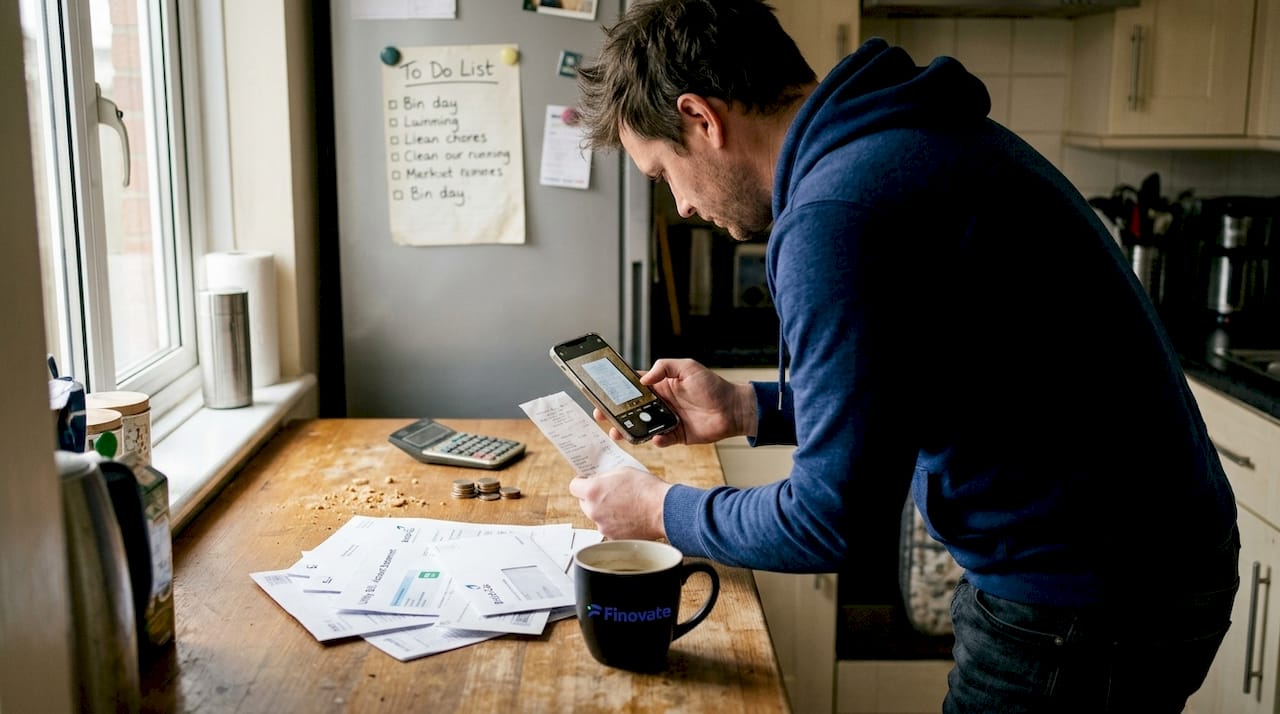
Key statistic: Businesses that reconcile accounts monthly are far less likely to face compliance issues than those that leave it to year-end. Consistent habits are your strongest defence.
Digital tools and automation: streamline your bookkeeping
Efficient processes rely on the right tools. Here is what digital automation offers and how it can transform your bookkeeping.
Finland's cloud accounting adoption sits at 55 to 60%, with industry leaders such as Visma and ProCount holding significant market share. This is not a coincidence. Cloud tools reduce manual effort, improve accuracy, and make compliance far more manageable.
E-invoicing has been standard in Finland since 1997, and digital maturity continues to grow. Modern SaaS tools now handle much of the compliance burden automatically.
The four bookkeeping tasks most worth automating are:
- E-invoicing: Send and receive invoices electronically, reducing errors and speeding up payment cycles.
- VAT reporting: Automated VAT calculations and submissions reduce the risk of miscalculation.
- Real-time reporting: Dashboards give you an instant view of cash flow, income, and expenses.
- AI-powered transaction classification: Machine learning tools categorise transactions automatically, saving hours each month.
| Software | Key features | Approximate monthly cost | Best suited for |
|---|---|---|---|
| Visma | Full accounting, payroll, e-invoicing | €30 to €80 | Small to medium businesses |
| ProCount | Cloud bookkeeping, VAT, reporting | €20 to €60 | Small businesses and accountants |
| Procountor | E-invoicing, HR, financial statements | €40 to €100 | Growing SMEs |
| Netvisor | Real-time reporting, integrations | €25 to €70 | Tech-forward small businesses |
Exploring cloud accounting platforms that integrate with Finnish tax systems will save you considerable time. If you are ready to take the next step, read more about automating your bookkeeping to understand the full range of efficiency gains available.
Monitor key financial ratios and reports
With digital data more accessible than ever, monitoring core metrics turns bookkeeping into a strategic business asset.
A monthly review of your profit and loss account and balance sheet gives you early warning signs of financial stress. Many small business owners only look at these figures at year-end, which is far too late to act on problems.
Track these core ratios every month to stay informed:
- Gross profit margin: Reveals how efficiently you produce or deliver your product or service.
- Operating profit margin: Shows what remains after operating costs, before tax.
- Current ratio: Measures your ability to cover short-term liabilities with short-term assets.
- Quick ratio: A stricter version of the current ratio, excluding inventory.
- Receivables turnover: Indicates how quickly customers pay you.
- Revenue growth rate: Tracks whether your business is expanding or contracting.
These ratios are not just for investors. They help you make better decisions about hiring, pricing, and investment. They also support compliance by ensuring your financial statements reflect the true position of your business.
For a solid grounding in the numbers that matter most, our guide to basic bookkeeping ratios is a useful starting point.
Pro Tip: Set calendar reminders to review your ratios on the same day each month, ideally aligned with your VAT filing date. This creates a consistent rhythm and ensures nothing is overlooked.
When to seek professional help with your bookkeeping
While automation and best practices go a long way, there are times when only expert support will guarantee peace of mind.
Using an accounting firm or expert accountant is especially valuable for compliance and proactive advice. The following scenarios are clear signals that professional support is worth the investment:
- Your business is entering a growth phase with new staff, assets, or revenue streams.
- You are applying for public grants or loans that require audited financial statements.
- Your finances involve multi-year assets, depreciation schedules, or complex VAT arrangements.
- You have received a query or audit notice from the Finnish Tax Administration.
- You simply do not have the time or confidence to manage bookkeeping accurately.
A Finnish accountant does far more than record transactions. They interpret tax law changes, identify deductions you may have missed, and help you plan for the year ahead. This is proactive financial management, not just compliance.
"An accountant is not a cost. They are an investment in accuracy, compliance, and the long-term health of your business."
Even micro businesses benefit from at least an annual review with a professional. Explore the different accounting methods for entrepreneurs to understand which approach suits your current stage.
Bookkeeping methods compared: single-entry vs double-entry
Finally, let us clarify which bookkeeping method fits your business best.
Single-entry bookkeeping is suitable for micro sole proprietors with simple, domestic-only operations. It records each transaction once, either as income or expenditure. It is straightforward but offers limited financial insight.
Double-entry records every transaction twice, as a debit in one account and a credit in another. This system is required for most businesses in Finland and provides a complete picture of your financial position.
Single-entry: pros and cons
- Pros: Simple to maintain, low administrative burden, suitable for very small operations.
- Cons: Limited reporting, no balance sheet, harder to detect errors, not suitable for VAT-registered businesses with complex transactions.
Double-entry: pros and cons
- Pros: Full financial reporting, balance sheet, easier VAT reconciliation, better for growth and investment decisions.
- Cons: More complex to maintain, typically requires software or professional support.
| Feature | Single-entry | Double-entry |
|---|---|---|
| Reporting depth | Basic income/expense | Full profit/loss and balance sheet |
| VAT handling | Limited | Full reconciliation |
| Error detection | Difficult | Built-in through balancing |
| Effort required | Low | Moderate to high |
| Who it suits | Micro sole proprietors | Most businesses in Finland |
If your turnover is approaching €200,000 or you are taking on staff, switch to double-entry before you are legally required to. Waiting until you cross the threshold creates unnecessary disruption. Read more about accounting methods compared to make an informed decision.
Next steps: make bookkeeping effortless with expert support
You now have a clear picture of what effective bookkeeping looks like for a Finnish small business. The next step is putting it into practice, and you do not have to do it alone.
At Finovate, we help small business owners across Finland simplify their financial management, stay compliant, and spend less time on administration. Whether you need a reliable monthly invoicing service, dedicated accounting for delivery partners, or full expert accounting support, we have a solution that fits your business. Our team handles the detail so you can focus on what you do best. Get in touch today and let us build a bookkeeping process that works for you.
Frequently asked questions
What records must I keep for bookkeeping in Finland?
You must keep all dated, numbered receipts and supporting documents, recording every transaction accurately for the statutory retention period of generally six years.
Is single-entry bookkeeping enough for my small business?
Single-entry suits micro sole proprietors with turnover under €200,000 and simple operations; if you exceed any of the key thresholds, double-entry is required.
How long do I have to file my financial statements?
You must file financial statements within 4 months of your financial year end if required by your company size or a non-calendar financial year.
Do I need to use accounting software in Finland?
While not legally mandatory, most businesses use cloud software because Finland's cloud adoption for bookkeeping sits at 55 to 60%, reflecting how much it simplifies VAT, e-invoicing, and compliance.
When should I hire an accountant for my small business?
Hire a professional as soon as your finances grow beyond basic sales and expenses; a professional accountant provides both compliance assurance and proactive financial advice.