
TL;DR:
- Finnish law obligates all businesses to maintain accurate, complete accounting records to prevent legal liabilities. Proper documentation includes transaction evidence, bookkeeping records, and period-end statements, with specific storage durations and requirements based on document type. Ongoing discipline and proper system management are essential for compliance, decision-making, and financial health, supported by professional bookkeeping services when needed.
Running a small or medium-sized business in Finland means navigating a set of bookkeeping obligations that can feel overwhelming without a clear framework. Finnish law places the responsibility for proper accounting firmly on the shoulders of management, meaning that gaps in your records are not simply administrative inconveniences but potential legal liabilities. This article gives you a practical, structured guide to every document category your business must collect, organise, and retain, along with the storage periods and situational rules that apply to each one.
Table of Contents
- Understanding bookkeeping requirements in Finland
- Core transaction documents: what to collect and store
- Bookkeeping records and period-end statements
- Single-entry vs double-entry: method determines your document set
- Retention periods and additional special-case documents
- Our perspective: why a checklist alone is not enough
- How we can support your bookkeeping in Finland
- Frequently asked questions
Key Takeaways
| Point | Details |
|---|---|
| Capture every transaction | Always collect and store a dated, numbered record for every business transaction to comply with Finnish law. |
| Know retention requirements | Receipts must be stored for at least 6 years and financial statements for at least 10 years from the end of the financial year. |
| Method affects documentation | Single-entry is simpler, but moving to double-entry requires more documents and stricter accrual record-keeping. |
| Prepare period-end statements | SMEs must complete and store annual financial statements, including profit and loss accounts and balance sheets. |
| Special cases matter | Board meeting minutes and attachments become essential when filing with PRH/C tr or substantiating financial statement items. |
Understanding bookkeeping requirements in Finland
Every business operating in Finland is legally required to maintain accounting records. This is not optional, and the obligation applies regardless of your company's size, legal form, or turnover. As Vero.fi confirms, Finnish businesses must keep accounting records and management is directly responsible for ensuring that proper accounting is carried out.
This responsibility is significant. If your records are incomplete or inaccurate, it is the business owner or board that faces the consequences, not your accountant. Understanding this from the outset shapes how seriously you should treat your document management.
Finnish bookkeeping documentation falls into three broad groups:
- Transaction documents: The raw evidence of every financial event, such as invoices, receipts, and bank statements.
- Bookkeeping records: The organised outputs produced from transaction evidence, including account ledgers and journals.
- Period-end statements: The formal financial summaries prepared at the close of each financial year.
For practical guidance on staying compliant, reviewing SME bookkeeping compliance requirements in detail will help you build a reliable system from the start.
Key principle: Bookkeeping is not just about satisfying the tax authority. It gives you an accurate picture of your business's financial health, which is essential for making sound decisions throughout the year.
Core transaction documents: what to collect and store
Once you understand your obligations, the next step is to focus on collecting the right evidence for every business event. Transaction documents are the foundation of your entire bookkeeping system. Without them, you cannot produce reliable records or financial statements.
According to Finnish tax authority guidance, essential bookkeeping documents are the receipts, attachments, and business transaction documentation that are collected, dated, numbered, and stored. Every single transaction your business makes must be supported by a document that meets these criteria.
The most common transaction documents include:
- Sales invoices: Issued to your customers for goods or services provided. Each invoice must include the date, a sequential number, your VAT number, and a clear description of the transaction.
- Purchase invoices: Received from your suppliers. These must be stored in full, including any credit notes or corrections.
- Receipts: For smaller purchases where a formal invoice is not issued. A receipt must show the date, amount, and nature of the purchase.
- Bank statements: These confirm the movement of funds and must be reconciled with your invoices and receipts regularly.
- Contracts and agreements: Any written agreement that governs a financial relationship, such as a lease, a service contract, or a loan agreement, forms part of your transaction evidence.
- Correction documents: If you amend a tax return or correct an accounting entry, the supporting documents for that correction must also be stored.
Following bookkeeping best practices means keeping these documents in a logical, accessible order. Whether you store them digitally or in physical folders, the system must allow you or an auditor to trace any transaction quickly.
Pro Tip: Assign a sequential number to every voucher as soon as it arrives. This simple habit prevents documents from being lost or duplicated and makes reconciliation far easier at year-end. You can read more about bookkeeping basics in Finland to build a numbering system that suits your business.
Bookkeeping records and period-end statements
After gathering your transaction evidence, the next task is to organise these materials into formal records and prepare the required end-of-year summaries. This stage transforms raw documents into structured financial information that management, investors, and tax authorities can rely on.
Bookkeeping records are the ongoing outputs produced from your transaction documents. These include:
- The general ledger: A complete record of all accounts and their movements throughout the financial year.
- The journal: A chronological log of every transaction, showing debits and credits in double-entry systems.
- Account-specific ledgers: Separate records for accounts receivable, accounts payable, fixed assets, and other key categories.
- Lists of materials and inventory: Where relevant to your business operations.
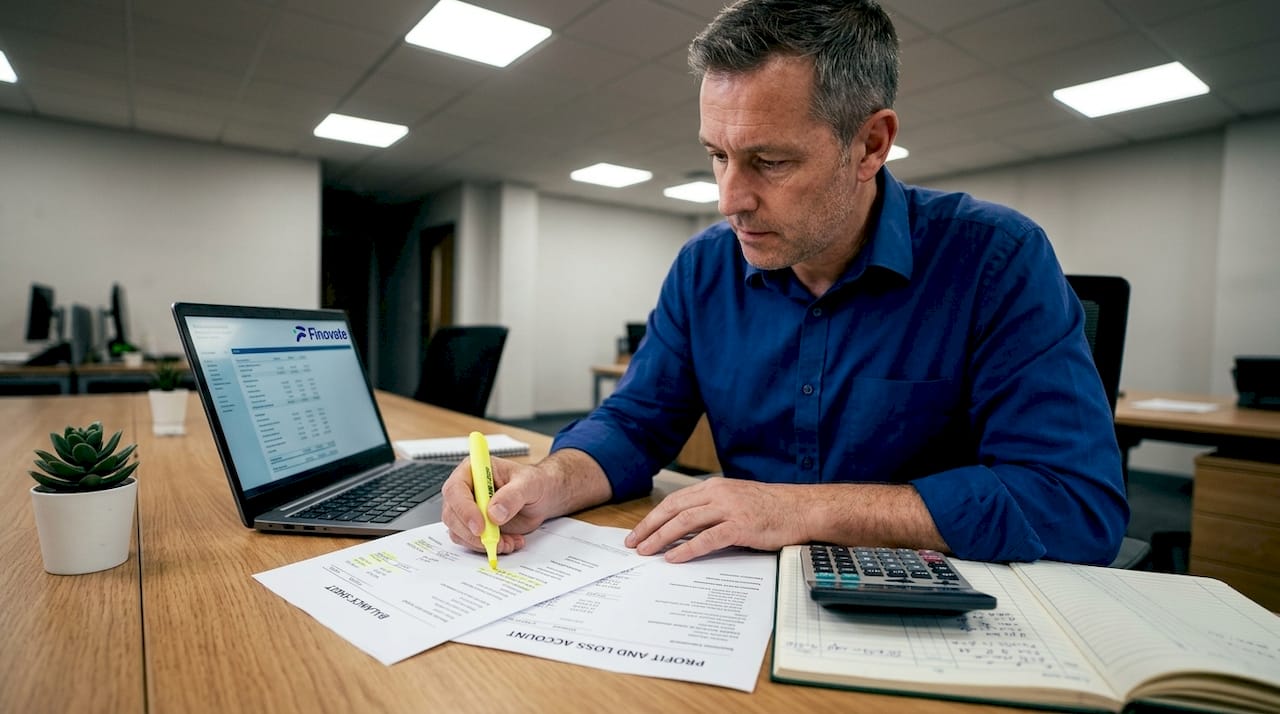
At the end of each financial year, you must prepare formal financial statements. Finnish law is clear on both the content and the timing. Financial statements must include at least a profit and loss account and a balance sheet with notes, and these must be prepared within four months of the financial year end.
Important deadline: If your financial year ends on 31 December, your financial statements must be completed by 30 April of the following year. Missing this deadline can create complications with tax filings and official submissions.
The balance sheet specifications, which detail the individual items making up your assets and liabilities, must also be prepared and stored alongside the main statements. These specifications are not always required to be submitted to authorities, but they must be available for inspection.
For a thorough understanding of what these outputs must contain, reviewing financial report requirements for Finnish SMEs provides the detail you need. You can also follow a step-by-step bookkeeping process to ensure nothing is missed when closing your accounts.
Single-entry vs double-entry: method determines your document set
Not all Finnish SMEs face the same documentation burden. The bookkeeping method your business uses has a direct impact on the complexity and volume of documents you must maintain.
Small businesses and sole traders may use single-entry bookkeeping, which is a simpler cash-based system that records income and expenses without the full debit and credit structure. This method requires fewer documents and is easier to manage without professional support.
However, double-entry bookkeeping is mandatory for businesses that meet at least two of the following three thresholds in two consecutive financial years:
| Threshold | Limit |
|---|---|
| Balance sheet total | Over EUR 100,000 |
| Annual turnover | Over EUR 200,000 |
| Average number of employees | More than 3 |
Once your business crosses two of these thresholds, double-entry on an accruals basis becomes mandatory. This means your document set expands considerably. You must maintain a full journal, a general ledger, and accrual adjustment records. Accrual adjustments account for income earned or expenses incurred in one period but paid in another, and each adjustment must be supported by documentation.
Double-entry also requires you to document:
- Opening and closing balance entries for each account
- Depreciation calculations for fixed assets, supported by asset registers
- Accrued income and prepaid expenses, with the underlying contracts or invoices as evidence
- Any provisions or write-offs, with management decisions or valuations to support them
Pro Tip: Even if your business currently qualifies for single-entry bookkeeping, it is worth setting up your records as if you were using double-entry. Growth can push you over the thresholds unexpectedly, and transitioning mid-year without proper records is far more disruptive than starting with a robust system. Reviewing guidance on optimising bookkeeping workflow can help you design a scalable process from the beginning.
Retention periods and additional special-case documents
Documentation is only useful if kept for the correct duration. Finnish law specifies minimum retention periods for each category of bookkeeping material, and these must be observed even if the business closes or changes ownership.
| Document category | Minimum retention period |
|---|---|
| Accounting vouchers and receipts | 6 years from end of financial year |
| Financial statements and accounting documents | 10 years from end of financial year |
| Contracts and agreements | Duration of contract plus 6 years |
| Corporate decision minutes | As long as legally required |
As confirmed by Finnish tax authority guidance, accounting vouchers must be retained for at least six years and financial statements and accounting documents for at least ten years from the end of the relevant financial year. These are baseline requirements, and certain situations may demand longer retention.
Beyond the standard categories, some businesses must include additional documents in their bookkeeping file. For companies required to submit financial statement data to the Finnish Patent and Registration Office (PRH) or other authorities, the document list expands to include corporate decision minutes and attachments used to substantiate items such as profit distribution decisions. If your company has paid dividends or made other distributions, the board minutes approving those distributions must be stored as part of your bookkeeping file.
Additional special-case documents to be aware of include:
- Shareholders' meeting minutes: Required when decisions affecting the financial statements are made at a general meeting.
- Auditor's reports: If your company is subject to statutory audit, the auditor's report must be stored alongside the financial statements.
- VAT reconciliation documents: Records showing how VAT returns were calculated and reconciled with your bookkeeping entries.
- Payroll records: Detailed records of wages paid, tax withheld, and social contributions made for each employee.
Privacy note: When submitting documents to authorities, always exclude personal identity codes and other confidential personal information from attachments unless specifically required. This applies to payroll documents and any records that include employee or customer personal data.
For a broader view of how these rules fit into the Finnish accounting framework, the Finnish accounting rules guide covers the legal context in detail.
Our perspective: why a checklist alone is not enough
Many SME owners approach bookkeeping as a compliance exercise, something to be completed at year-end and then forgotten until the next filing deadline. We understand why this happens. Running a business is demanding, and financial administration can feel like a distraction from the work that actually generates revenue.
However, we have seen repeatedly that businesses which treat bookkeeping as a continuous process rather than a periodic task are better positioned in almost every way. They respond to tax authority queries faster. They identify cash flow problems earlier. They make more informed decisions about investment and hiring. And when they seek financing, they can present clean, credible records that instil confidence in lenders and investors.
A checklist of required documents is a valuable starting point, but the real discipline is in maintaining the system consistently throughout the year. The businesses that struggle most at year-end are not those with complex transactions. They are those that allowed their records to fall behind during busy periods and then faced the task of reconstructing months of activity from incomplete evidence.
The uncomfortable truth is that the cost of poor bookkeeping is almost always higher than the cost of getting it right from the start. Late filing penalties, missed deductions, and the professional fees required to reconstruct disorganised records add up quickly. Building a reliable document management habit is one of the most cost-effective investments a Finnish SME can make.
How we can support your bookkeeping in Finland
Managing the full range of bookkeeping documents, from daily transaction vouchers to annual financial statements, requires consistent attention and a clear understanding of Finnish requirements. We work with small and medium-sized businesses across Finland to take this burden off your plate.
At Finovate, we offer bookkeeping services tailored to the specific needs of Finnish SMEs, whether you are a sole trader using single-entry records or a growing company that has moved into double-entry territory. Our team handles transaction processing, ledger maintenance, financial statement preparation, and retention management so that your records are always complete and compliant. We also support businesses with tax preparation, payroll processing, and advisory services, giving you a single point of contact for all your financial management needs. Contact us to discuss how we can help you build a bookkeeping system that works for your business.
Frequently asked questions
How long should I keep receipts and accounting materials in Finland?
Receipts and vouchers must be kept for at least six years from year-end, while financial statements and accounting materials must be retained for at least ten years from the end of the relevant financial year.
What happens if my SME switches from single-entry to double-entry bookkeeping?
You must expand your documentation to include accrual adjustments, a full general ledger, and detailed account-specific records, as double-entry on accruals basis requires a more structured and comprehensive approach to recording every transaction.
Are digital versions of bookkeeping documents accepted in Finland?
Electronic documents are fully accepted provided they are stored reliably, remain accessible throughout the required retention period, and can be reproduced in a readable format during an inspection or audit.
When are meeting minutes or special attachments needed in my bookkeeping file?
Meeting minutes and attachments such as profit distribution records are required when submitting financial statement data to the authorities or when substantiating decisions that affect the financial statements.
Who is responsible if my bookkeeping documents are incomplete?
Business management is legally responsible for ensuring that all required bookkeeping documents are collected, maintained, and stored correctly, regardless of whether an external accountant is involved.