

TL;DR:
- Effective accounting compliance for Finnish SMEs relies on preventive controls, regular monthly governance, and vigilant human oversight of technology. Maintaining documented evidence, using automated reminders, and adopting scaled frameworks like COSO help ensure ongoing regulatory adherence. Building simple, consistent habits in daily routines enables businesses to stay compliant, reduce audit costs, and support growth.
Accounting compliance is the practice of maintaining accurate financial records and meeting all statutory reporting obligations set by Finnish law and tax authorities. For small and medium-sized businesses in Finland, getting this right is not optional. Errors in bookkeeping, missed VAT deadlines, or poorly documented transactions can trigger penalties, damage creditor relationships, and create costly audit complications. The top accounting compliance tips covered here draw on global frameworks and local Finnish requirements to give you a clear, practical path forward. Whether you manage accounts in-house or work with an external firm, these strategies will help you stay on the right side of the rules.
1. Top accounting compliance tips: start with preventive controls
Preventive controls are the first line of defence in any accounting compliance strategy. They stop errors before they enter your records, rather than catching them after the fact. Common examples include approval workflows for payments, input validation rules in your accounting software, and authorisation limits that require a second sign-off above a set threshold.
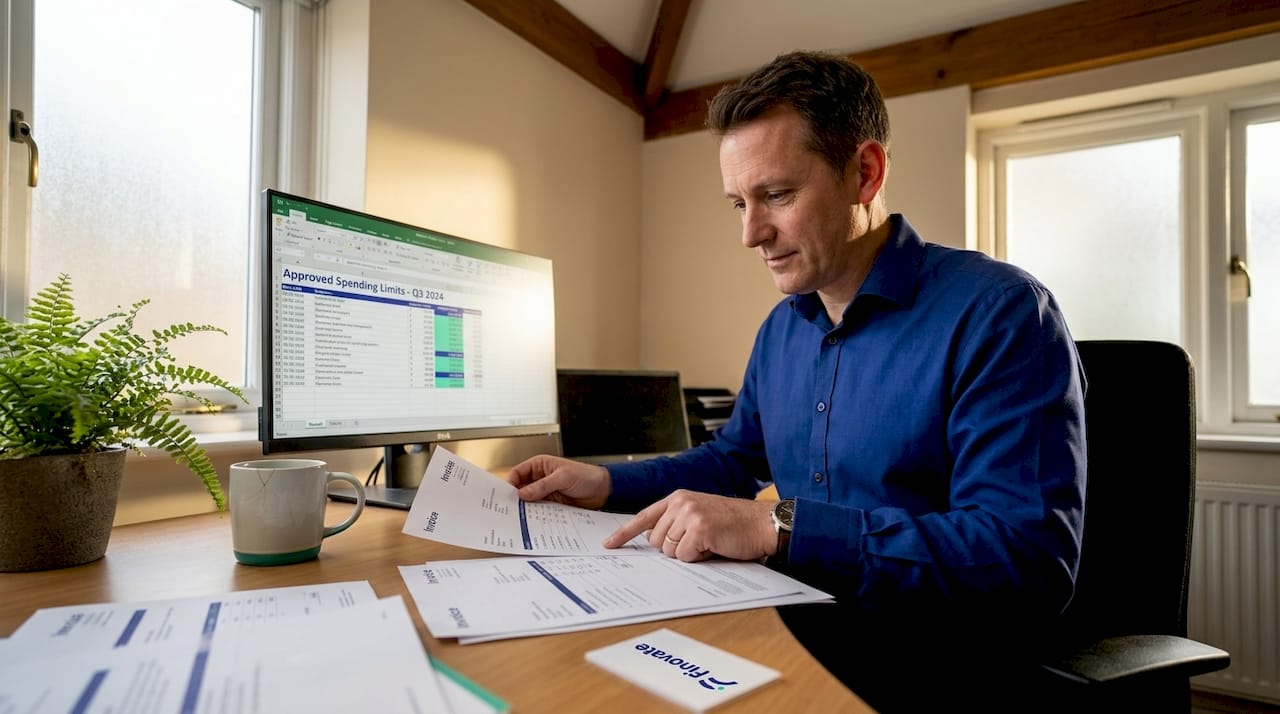
For Finnish SMEs, the practical starting point is defining who can approve what. A sole director approving their own expense claims with no secondary review is a control gap. Introducing even a simple two-person sign-off process for transactions above a defined amount reduces both error and fraud risk significantly.
Pro Tip: Set authorisation thresholds in your accounting software so that any transaction above a defined amount triggers an automatic approval request. This creates a documented audit trail with no extra manual effort.
2. Build a monthly close process and stick to it
A monthly close process is a structured sequence of tasks completed at the end of each accounting period to verify that all transactions are recorded, reconciled, and documented. Companies that integrate compliance into monthly workflows rather than treating it as an annual project maintain far stronger control quality year-round.
The four core phases are: transaction cut-off (confirming all invoices and receipts for the period are posted), account reconciliation (matching ledger balances to bank statements and sub-ledgers), variance review (comparing actuals to budget or prior period), and documentation sign-off (confirming all supporting evidence is filed). Each phase produces audit evidence as a natural by-product of normal operations.
For small teams, this does not need to be complex. A shared checklist in a tool such as Google Sheets or Notion, reviewed by the business owner each month, is sufficient to create a repeatable and auditable process.
3. Maintain a tax calendar with automated reminders
Finland's tax obligations follow fixed deadlines set by the Finnish Tax Administration (Vero Skatteverket). VAT returns, employer contributions, corporate income tax prepayments, and annual financial statements all have specific due dates. Missing any one of them can result in late-filing penalties and interest charges.
A tax calendar is a document or digital tool that maps every obligation to its deadline, the responsible person, and the data required to complete it. Pair this with automated reminders in your calendar application or accounting software, and you remove the risk of deadlines being missed simply because they were forgotten.
Pro Tip: Build your tax calendar at the start of each financial year and schedule reminder alerts at least two weeks before each deadline. This gives you time to gather documentation rather than scrambling at the last moment.
4. Use cloud accounting software with strong security standards
Cloud hosting with SOC 2 Type 2 certification provides stronger compliance assurance than on-premise or uncertified solutions because it verifies ongoing control effectiveness over time, not just at a single point. This matters for Finnish SMEs because your accounting data must be accurate, accessible, and protected against loss or unauthorised access.
Widely used cloud accounting platforms such as Procountor, Netvisor, and Visma offer features specifically designed for Finnish statutory requirements, including e-invoicing via the Finvoice standard, automated VAT reporting, and integration with the Finnish Tax Administration's OmaVero portal. Choosing a platform that supports these integrations reduces manual data entry and the errors that come with it.
The key governance principle is this: technology reduces risk, but it does not eliminate the need for human oversight. Assign a named person in your business to review system outputs monthly and confirm that automated processes are working as intended.
5. Adopt the COSO framework, scaled to your size
The COSO Internal Control: Integrated Framework is the globally recognised standard for internal control assessment, used by the vast majority of public companies. For Finnish SMEs, adopting COSO does not mean implementing an enterprise-scale compliance programme. It means applying its five core components at a scale appropriate to your business.
Those five components are: control environment (the tone and values set by leadership), risk assessment (identifying where errors or fraud are most likely), control activities (the specific preventive and detective measures you put in place), information and communication (how financial data flows through the business), and monitoring (how you check that controls are working). Mid-market companies routinely replace complex enterprise control matrices with simplified monthly self-assessments and documented checklists, which is entirely appropriate for most Finnish SMEs.
6. Understand the difference between preventive and detective controls
Preventive and detective controls serve different but complementary roles in accounting compliance. The table below summarises the key differences.
| Control type | Definition | Examples | Best used for |
|---|---|---|---|
| Preventive | Stops errors or fraud before they occur | Approval workflows, input validation, access restrictions | High-risk transactions, payment authorisation |
| Detective | Identifies errors or irregularities after they occur | Bank reconciliations, variance analysis, audit reviews | Verification, month-end close, exception reporting |
Preventive controls are more cost-efficient in the long run because they reduce the volume of errors that need to be corrected. Detective controls act as a safety net and are indispensable for verification. The most effective accounting compliance strategies for SMEs prioritise preventive controls first, then layer detective controls on top to catch anything that slips through.
Pro Tip: If your team is small and you cannot fully segregate duties, compensating detective controls such as a monthly management review of all transactions above a set threshold can offset the risk.
7. Integrate AI tools carefully and with clear oversight
Regulatory change velocity has overtaken audit risk as the top tax compliance threat for small businesses in 2026. AI-powered tools can help by monitoring regulatory updates, flagging changes relevant to your business, and accelerating tax research. Thomson Reuters Checkpoint and similar platforms now offer AI-assisted compliance monitoring that alerts practitioners to legislative changes in near real time.
However, AI tools require practitioner oversight because they can produce errors without human review. The analytical responsibility for any compliance decision remains with the business owner or their accountant, not the software. Use AI to speed up research and flag risks, but always verify outputs before acting on them.
Only 14% of tax professionals currently have a defined AI strategy, which means most businesses are using these tools reactively. Defining a clear policy for how AI is used in your compliance processes, including who reviews outputs and how decisions are documented, puts you ahead of the majority.
8. Document everything and retain evidence properly
Documentation is the physical proof that your controls are working. Without it, even a well-designed compliance process cannot be verified by an auditor. Finnish accounting law requires businesses to retain accounting records for at least six years from the end of the financial year in question.
Best practice goes beyond the legal minimum. For each significant transaction, retain the original invoice or receipt, the approval record, the payment confirmation, and any correspondence related to the transaction. For recurring controls such as monthly reconciliations, retain the completed reconciliation document with the reviewer's sign-off and the date it was completed.
Cloud storage with version control, such as Google Drive or SharePoint, makes this straightforward. Organise folders by financial year and accounting period so that any document can be located within minutes during an audit.
9. Invest in staff training and define roles clearly
Compliance failures in SMEs are frequently caused not by bad intentions but by unclear responsibilities. When no one knows who is responsible for a specific task, it either gets done incorrectly or not at all. Defining roles in writing, even in a simple one-page responsibility matrix, removes this ambiguity.
Training does not need to be expensive. The Finnish Tax Administration publishes free guidance in Finnish, Swedish, and English covering VAT, employer obligations, and corporate tax. Scheduling a short annual review of this material with any staff involved in financial processes keeps knowledge current and creates a record of training activity.
Leadership tone is the most critical element in preventing independence violations and maintaining ethical compliance standards. When business owners treat compliance as a priority and model that behaviour, staff follow.
10. Prepare for audits as a continuous activity, not an annual event
Companies that achieve a five-day month-end close pay up to 40% less in audit fees than those that do not. This is because well-prepared businesses provide auditors with clean, organised documentation that requires less investigative work. The savings are real and material for SMEs where audit costs represent a meaningful proportion of the finance budget.
Audit readiness is best maintained through a self-assessment scoring process applied monthly. The key dimensions to score are: documentation completeness, reconciliation status, control evidence availability, data lineage clarity, and open issue resolution. Scoring each dimension on a simple three-point scale at month-end gives you a running picture of your compliance health and highlights gaps before an auditor does.
For guidance on accounting periods and deadlines specific to Finnish SMEs, reviewing the statutory requirements for your business type is a practical first step.
Key takeaways
Effective accounting compliance for Finnish SMEs requires preventive controls, continuous monthly governance, and technology used with clear human oversight.
| Point | Details |
|---|---|
| Prioritise preventive controls | Approval workflows and input validation stop errors before they enter your records. |
| Close accounts monthly | A structured month-end process produces audit evidence as a natural by-product of normal operations. |
| Use a tax calendar | Mapping all Finnish tax deadlines with automated reminders prevents costly late-filing penalties. |
| Right-size your technology | Cloud platforms with SOC 2 Type 2 certification reduce risk, but human review of outputs remains mandatory. |
| Treat audit readiness as ongoing | Monthly self-assessments and clean documentation can reduce audit fees by up to 40%. |
What I have learned about compliance in practice
Working with Finnish SMEs over many years, the pattern I see most often is this: business owners understand that compliance matters, but they treat it as something to address when a deadline is approaching or a problem has already occurred. That reactive posture is expensive. The businesses that handle compliance most confidently are not necessarily the ones with the most sophisticated systems. They are the ones that have built simple, repeatable habits into their monthly routines.
The technology conversation is worth addressing directly. Cloud accounting platforms and AI tools genuinely reduce the manual burden of compliance, and I encourage their use. But I have seen businesses over-invest in software and under-invest in the human processes that make software useful. A well-configured accounting platform with no one reviewing its outputs is not a compliance programme. It is a false sense of security.
The other observation I would share is that accounting compliance and business growth are not in tension. Businesses with clean books and well-documented controls attract better financing terms, close deals faster, and spend less time managing crises. Compliance done well is a commercial asset, not just a regulatory obligation. Start with the basics, build the habit, and the confidence follows.
— Busayo
How Finovate helps Finnish SMEs stay compliant
Staying on top of accounting compliance is easier when you have the right support in place.
Finovate provides Finnish small and medium-sized businesses with expert accounting and tax services, including bookkeeping, VAT reporting, payroll processing, and business advisory. Our team understands the specific requirements of Finnish accounting law and works with you to build the controls, documentation, and reporting processes that keep your business compliant year-round. Whether you are setting up your first compliance process or looking to improve an existing one, we offer tailored accounting services designed for businesses at every stage. Get in touch to find out how we can support your compliance goals.
FAQ
What are the top accounting compliance tips for Finnish SMEs?
The most effective tips include building preventive controls such as approval workflows, maintaining a monthly close process, using a tax calendar with automated reminders, and retaining documentation for at least six years as required by Finnish law.
How does cloud accounting software improve compliance?
Cloud platforms with SOC 2 Type 2 certification provide ongoing assurance of control effectiveness and support Finnish-specific requirements such as Finvoice e-invoicing and OmaVero integration, reducing manual errors and improving audit trails.
What is the difference between preventive and detective controls?
Preventive controls stop errors before they occur, such as payment approval limits, while detective controls identify errors after the fact, such as bank reconciliations. Effective compliance strategies use both, with preventive controls as the primary layer.
How can I reduce audit fees as a small business in Finland?
Maintaining a continuous state of audit readiness through monthly self-assessments and clean documentation can reduce audit fees by up to 40%, as auditors spend less time investigating well-organised records.
Is AI useful for accounting compliance in small businesses?
AI tools can monitor regulatory changes and accelerate tax research, but final compliance responsibility rests with the business owner or their accountant. Always verify AI-generated outputs before acting on them.