
For 2026, Verohallinto's maximum tax-exempt kilometre allowance for privately owned cars is €0.55 per kilometre, down from €0.59 in 2025. The full domestic per diem sits at €54 and the partial per diem at €25. These figures come from decision VH/6575/00.01.00/2025, effective from 1 January 2026.
TL;DR:
- The 2026 maximum tax-free kilometre allowance drops to €0.55 per kilometre, potentially decreasing tax-free reimbursements for high-mileage drivers.
- Supplements for specific conditions, vehicle types, and additional passengers or loads are cumulative, increasing eligible reimbursements if documented correctly.
- Only trips that qualify as genuine work-related journeys, such as visits to temporary sites or clients, are eligible; regular commutes are excluded from tax-free reimbursements.
- All payments, allowances, and add-ons must be accurately reported to Tulorekisteri using specific codes, with excess amounts taxed and subject to social insurance contributions.
- Employers should maintain detailed digital logbooks and perform monthly reconciliations to stay compliant and prevent errors in kilometre and per diem reporting.
Table of Contents
- 2026 rates in detail: base, add-ons and vehicle-specific figures
- Who qualifies and when a journey counts as a business trip
- Employer obligations: Tulorekisteri reporting and payroll handling
- How to claim and document trips: logbook and payroll workflow
- Common limits, pitfalls and worked calculation examples
- Finovate's payroll checklist and operational resources
- Applying the 2026 rules in practice
- How Finovate keeps your mileage reporting compliant
- Sources
2026 rates in detail: base, add-ons and vehicle-specific figures
The drop from 2025 to 2026 might look small on a single trip, but it adds up quickly for anyone driving regularly for work. A sales rep driving a large number of kilometres per year can lose a significant amount in tax-free allowance purely from the rate change, before you even factor in add-ons.
Verohallinto's decision does not stop at the base car rate. It sets out a full schedule of supplements that stack on top of the €0.55/km figure when specific conditions apply, along with separate rates for vehicles that are not cars at all.
These add-ons are cumulative, so a car towing a trailer with two passengers on board could legitimately claim several supplements on the same journey, provided each condition is genuinely met and documented.
Vehicle-specific rates cover situations the base car rate doesn't fit:
- Motorbikes and mopeds have their own lower per-kilometre rate, distinct from the car category.
- Snowmobiles and boats are rated separately, with boat rates commonly tiered by engine power.
- Electric and hybrid cars sit inside the same private car category as petrol and diesel vehicles. Verohallinto's 2026 decision created no separate rate for electric vehicles, so the €0.55/km figure applies regardless of powertrain.
On the subsistence side, the full domestic per diem of €54 applies to trips lasting over ten hours, while the partial per diem of €25 covers trips of six to ten hours. A separate meal allowance applies where no per diem is paid but a paid meal isn't provided by the employer. All these figures sit within the same Verohallinto decision on 2026 travel expenses.
Who qualifies and when a journey counts as a business trip
A journey only qualifies for tax-exempt kilometrikorvaus 2026 rates when it is a genuine work trip, not ordinary commuting. Verohallinto draws a firm line here: travel between home and a fixed, permanent workplace is ordinary commuting, and commuting costs are handled through the separate commuting expense deduction, not kilometrikorvaus.
A business trip typically means travel to a temporary work site, a client meeting, a secondary office, or between two workplaces during the same working day. The employer decides whether to pay a kilometre allowance at all and at what rate, up to Verohallinto's ceiling. Verohallinto doesn't mandate payment; it simply sets the maximum amount that can be paid tax-free.
Three situations cause most of the confusion in practice:
- Multiple fixed workplaces: travel between two regular offices in the same job can qualify, but the specifics depend on which location counts as the primary workplace.
- Home office arrangements: if home functions as the actual workplace under the employment contract, trips from home may be treated differently than ordinary commuting.
- Mixed-purpose trips: a journey combining a client visit with a personal errand only counts for the work-related portion, and payroll needs a clear split.
Employer obligations: Tulorekisteri reporting and payroll handling
Every tax-exempt kilometre payment, per diem, and meal allowance needs the right code when reported to Tulorekisteri. Use tulolaji 311 for verovapaa kilometrikorvaus, 331 for per diem, and 303 for meal allowance. Reports are due by the fifth day of the month following payment, no exceptions for late paperwork.
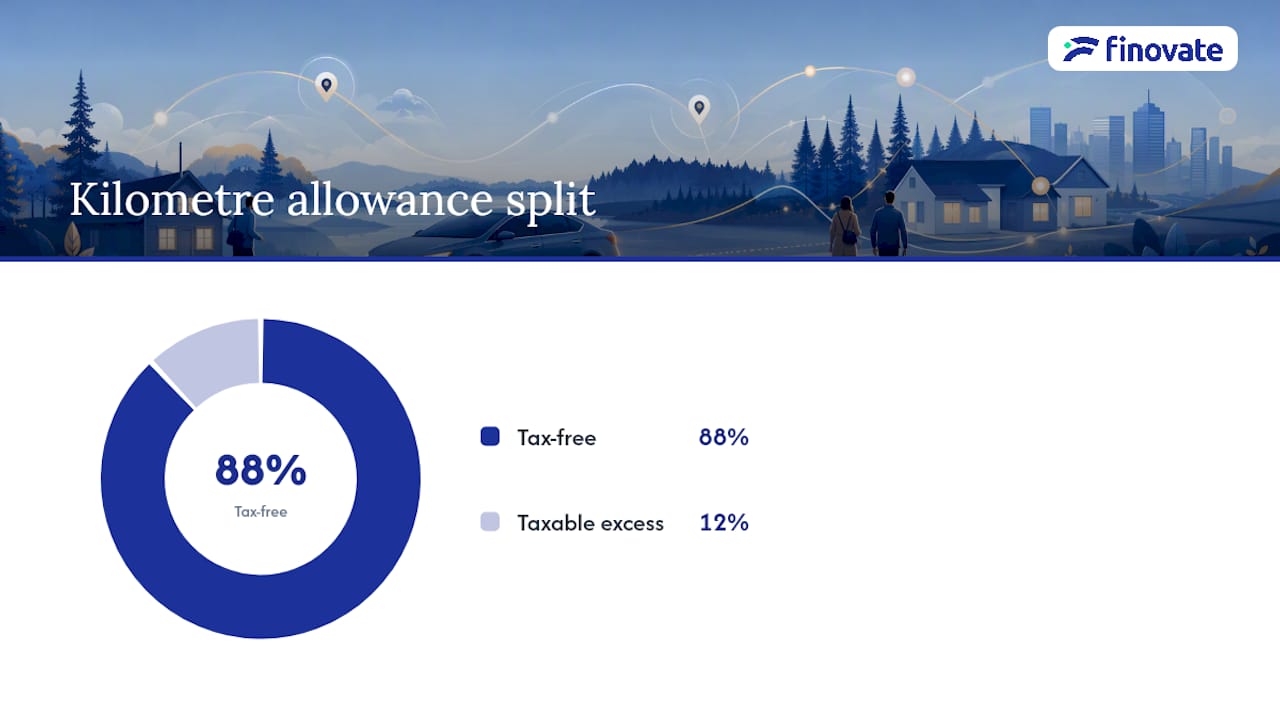
Where an employer pays more than Verohallinto's maximum, the excess isn't simply lost to the void; it becomes taxable income and needs its own tulolaji entry, separate from the tax-exempt portion. That excess also affects social insurance contributions, since taxable travel payments are treated more like ordinary wages than genuine cost reimbursements.
A short payroll checklist before you report anything:
- Confirm the trip purpose is documented and matches a genuine business need, not a commute.
- Check the kilometre count and any claimed add-ons against the logbook.
- Verify the rate applied doesn't exceed the 2026 Verohallinto ceiling.
- Split any excess-over-maximum amount into its own taxable tulolaji.
- Submit to Tulorekisteri by the fifth of the following month.
Pro Tip: Run a quick reconciliation between your payroll system and Tulorekisteri submissions monthly, rather than waiting for year-end. Catching a miscoded tulolaji in January is a five-minute fix; catching it in December is a much longer conversation with the employee.
How to claim and document trips: logbook and payroll workflow
A logbook that won't survive a Verohallinto query isn't worth keeping. At minimum, every entry needs the date, start and end locations, kilometres driven, the purpose of the trip, any passengers carried, and which vehicle was used.
Paper logbooks still technically satisfy ajopäiväkirja vaatimukset, but they're painful to audit and easy to lose. A digital record with timestamped entries, whether through an employer-approved system or a dedicated app, gives payroll something they can actually verify against calendar entries and client records. Whichever format you choose, consistency matters more than the tool itself.
The workflow that tends to hold up under scrutiny runs in four steps:
- The employee submits the trip log promptly after the journey, not weeks later from memory.
- A manager checks the stated purpose and confirms any add-ons (passenger, trailer, heavy load) actually applied.
- Payroll calculates the verovapaa portion against the 2026 rate ceiling and flags anything taxable.
- The finalised figures go to Tulorekisteri under the correct tulolaji codes.
Pro Tip: Ask employees to log trips the same day. Memory-based logbooks filled in at month-end are the single biggest source of disputed kilometre claims during a Verohallinto review.
For a fuller breakdown of what counts as a deductible cost versus a reimbursable one, see Finovate's guide to business deductions for Finnish entrepreneurs.
Common limits, pitfalls and worked calculation examples
Two caps catch out more payroll teams than any other rule. Tax-free kilometre reimbursement is capped at €3,000 per calendar year per recipient, and per diems are tax-exempt for a maximum of 20 days per year for the same recurring trip pattern. Beyond either threshold, the excess becomes taxable.
The most frequent payroll errors: lumping verovapaa and taxable amounts under the same tulolaji, reporting after the fifth-of-month deadline, and paying add-ons without documentation proving the trailer or passenger was genuinely there for work.
Two quick examples:
- An employee drives 40km with a trailer and one passenger: base €22.00 (40 x €0.55) plus trailer €3.60 (40 x €0.09) plus passenger €1.60 (40 x €0.04) = €27.20 tax-free.
- An employer pays €3,400 in kilometre allowance for the year against the €3,000 cap: the €400 excess is reported as taxable income under a separate tulolaji, with the €3,000 remaining verovapaa.
Finovate's payroll checklist and operational resources
Getting kilometrikorvaus right every month comes down to a handful of repeatable checks rather than heroics at year-end. Employers running their own payroll should build these into a standing routine:
- Verify logbook entries against the trip purpose before applying any add-on rate.
- Retain documentation for at least the statutory bookkeeping period, not just until the next payroll run.
- Run a monthly control comparing cumulative kilometre payments per employee against the €3,000 annual cap.
- Cross-check per diem days paid against the 20-day annual limit for recurring routes.
Verohallinto's Autoetulaskuri tool is worth bookmarking for anyone calculating company car benefits alongside kilometre allowances, since the two regimes interact in ways that trip up payroll teams unfamiliar with both. Entrepreneurs and light entrepreneurs face extra judgement calls, particularly around mixed personal and business use of a vehicle, where the line between commuting and a business trip needs documenting case by case. For broader payroll process guidance, see how to manage payroll effectively in Finland.
Applying the 2026 rules in practice
Reviewing mileage claims year after year, the same pattern repeats: employers rarely get the base rate wrong, but they consistently miss the annual caps until an employee is already over them. The practical fix is calendarised tracking, not better spreadsheets.
— Busayo
How Finovate keeps your mileage reporting compliant
Handling kilometrikorvaus 2026 compliance in-house with a spreadsheet can be challenging. Monthly checks integrated into the payroll cycle help ensure nothing slips through unnoticed.

Our accounting services cover payroll processing, bookkeeping, and expense workflow setup for Finnish SMEs, taxi and courier entrepreneurs, and light entrepreneurs alike. Whether you're setting up ajopäiväkirja processes for the first time or need someone to take Tulorekisteri reporting off your plate entirely, we handle the codes, the deadlines, and the reconciliation. If you invoice as a light entrepreneur and want your travel expenses handled correctly alongside your invoicing, our accounting service for delivery partners is built for exactly that. Get in touch and we'll review your current mileage and per diem setup against the 2026 rates.