

TL;DR:
- Tax law compliance requires Finnish businesses to meet strict reporting, payment, and record-keeping obligations enforced by the tax authority. Non-compliance leads to escalating penalties, interest, and operational disruptions that can severely damage a company's finances and reputation. Maintaining consistent, accurate filings provides strategic advantages such as better access to capital, improved investor trust, and long-term financial stability.
Tax law compliance is the mandatory fulfilment of all legal obligations related to taxation, including accurate reporting, timely payments, and proper record-keeping. For business owners in Finland, understanding why comply with tax laws is not a matter of choice. The Finnish Tax Administration enforces these obligations rigorously, and the consequences of falling short extend well beyond a simple fine. This guide explains the legal obligations, financial risks, and strategic advantages that make consistent tax compliance one of the most important practices for any Finnish SME.
Why comply with tax laws: legal obligations in finland
The Finnish tax system operates on what is called "voluntary compliance," but this term is widely misunderstood. Voluntary compliance means the taxpayer calculates and reports taxes without direct government supervision. The legal obligation to pay, however, remains absolute. Treating "voluntary" as "optional" is one of the most costly mistakes a business owner can make.
The Finnish Tax Administration requires businesses to meet several core obligations:
- Timely filing of income tax returns, VAT declarations, and payroll reports on set deadlines
- Accurate record-keeping that reflects all income, expenses, and deductions correctly
- Prompt payment of all assessed taxes, including advance tax instalments
- Reporting changes to business structure, turnover, or activities that affect tax liability
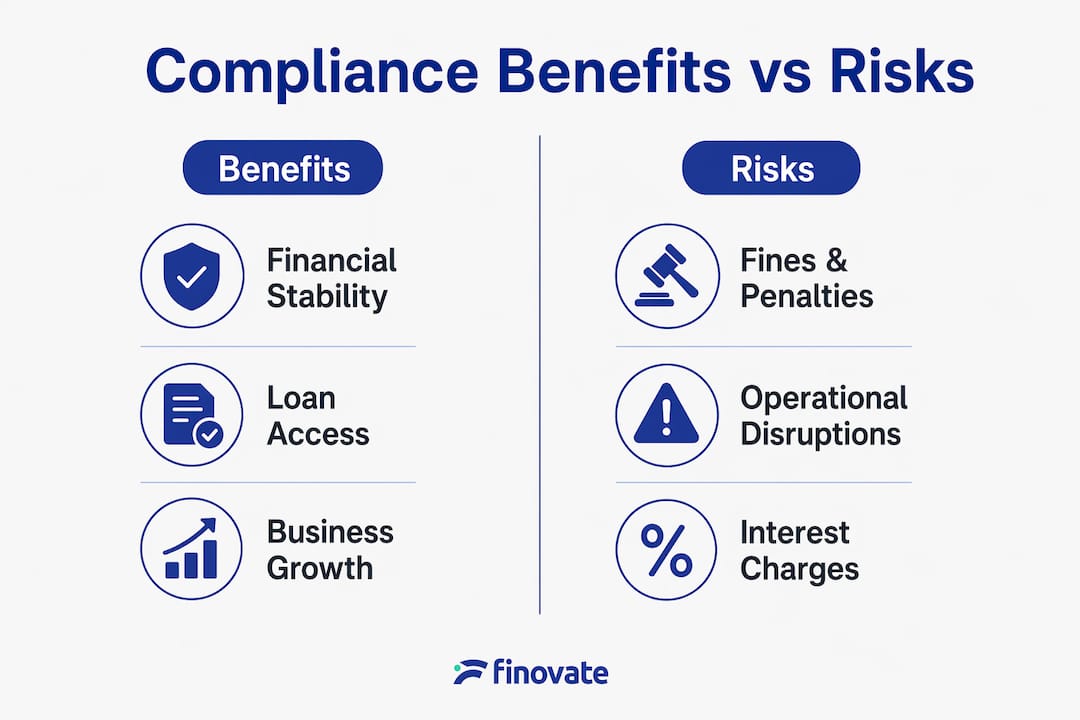
Failure to meet any of these obligations triggers a structured enforcement response. Non-compliance risks include bank account levies, wage garnishment, property liens, interest charges, and, in severe cases, criminal liability. These are not theoretical outcomes. The Finnish Tax Administration has clear authority to act, and it does so consistently.
Tax enforcement has a deterrence effect that increases voluntary compliance even when actual audit rates remain low. Businesses that believe they will not be caught are statistically wrong over any meaningful time horizon. Compliance rates in Finland have remained stable at around 80–85% since 2001, which means enforcement pressure is a permanent feature of the operating environment.

Pro Tip: Register for the Finnish Tax Administration's OmaVero online service to track your filing deadlines, review assessments, and respond to notices in one place. Missing a deadline because you did not see a notice is not an accepted defence.
What financial risks come from ignoring tax obligations?
Non-compliance does not stay contained. The financial damage compounds quickly, and many business owners underestimate how fast a small missed payment becomes a significant liability.
Here is how the escalation typically unfolds:
- Missed filing deadline triggers an automatic late-filing penalty from the Finnish Tax Administration.
- Unpaid tax balance begins accruing interest, which compounds monthly on the outstanding amount.
- Repeated non-compliance leads to enforcement action, including account levies that freeze business operations.
- Audit or formal review is triggered, requiring reconstruction of records across multiple years.
- Criminal referral becomes possible in cases involving deliberate concealment or fraud.
Reconstructing multiple years of non-compliance is costly in time, professional fees, and accumulated interest penalties. A business that avoids filing for two or three years does not simply owe the original tax. It owes the tax, plus compounded interest, plus penalties, plus the professional cost of untangling the records. That total can easily exceed the original liability several times over.
Operational disruptions add another layer of cost. A bank account levy does not pause your payroll obligations or your supplier payments. It simply stops your ability to meet them. For a Finnish SME operating on normal working capital, even a short-term levy can cause lasting damage to supplier relationships and credit standing.
Compliance reduces the risk of audits, and when audits do occur, compliant businesses face significantly fewer penalties. The cost of staying compliant is always lower than the cost of recovering from non-compliance.
What are the business benefits of consistent tax compliance?
The importance of tax compliance extends well beyond avoiding penalties. Consistent, accurate filing creates tangible business advantages that directly affect your ability to grow and access capital.
The key benefits include:
- Proof of income for loan applications. Finnish banks and lenders require verified income documentation. Filing income tax returns provides exactly that, supporting applications for business loans, credit lines, and leasing agreements.
- Eligibility for tax refunds. Accurate filings allow you to claim all legitimate deductions and recover overpaid taxes, improving cash flow.
- Loss carryforwards. Finnish tax law allows businesses to carry forward losses to offset future profits. This benefit is only available to businesses with clean, complete filing histories.
- Creditworthiness. A consistent compliance record signals financial discipline to banks, investors, and potential partners.
"Good tax compliance signals corporate transparency, valued by investors and strategic partners, becoming a business asset rather than just a bureaucratic cost." — What is Tax Compliance?
Setting up systematic processes for tax compliance can save companies significant sums and create growth opportunities by improving marketability and company valuation. For Finnish SMEs considering future investment rounds or acquisitions, a clean tax record is not a nice-to-have. It is a prerequisite. Investors conducting due diligence will examine your tax history, and any gaps or disputes will reduce your valuation or block the transaction entirely.
Tax compliance also supports the social contract between businesses and the state, funding the infrastructure, public services, and policy stability that Finnish businesses depend on. This is not abstract. Roads, digital infrastructure, and a stable regulatory environment all depend on tax revenue, and businesses that benefit from these services have a direct interest in sustaining them.
How does tax compliance support long-term financial planning?
Regular, accurate filing is the foundation of sound financial planning. Without it, you cannot make reliable forecasts, access certain tax reliefs, or present a credible picture to lenders or investors.
The comparison below illustrates the practical difference between compliant and non-compliant business scenarios:
| Factor | Compliant Business | Non-Compliant Business |
|---|---|---|
| Loan eligibility | Strong, with verified income records | Weak or blocked, missing documentation |
| Audit outcome | Minimal penalties, quick resolution | Costly reconstruction, significant penalties |
| Loss carryforward | Available, reducing future tax liability | Unavailable or disputed |
| Investor readiness | Clean records support due diligence | Gaps create valuation risk or deal failure |
| Cash flow predictability | Planned tax payments, no surprise levies | Unpredictable enforcement actions |
| Business licence standing | Maintained without interruption | At risk during enforcement proceedings |
Filing zero returns in no-income years maintains a clean compliance record and prevents costly penalties during future audits or business transactions. Many Finnish business owners skip this step during slow periods, assuming there is nothing to report. That assumption creates a gap in your filing history that will require explanation and potentially professional remediation later.
Tax compliance also integrates directly with cash flow management. When you file regularly and accurately, you can plan for tax payments in advance rather than facing unexpected demands. Advance tax instalments in Finland are calculated on your estimated income, and keeping these up to date avoids large year-end settlements that disrupt working capital.
Pro Tip: Work with a qualified accountant to review your tax planning strategies at least twice a year. Mid-year reviews allow you to adjust advance payments, identify deductions, and avoid year-end surprises.
For Finnish SMEs thinking about future growth, consistent compliance also affects your eligibility for certain government grants and public procurement contracts. Many Finnish public tenders require a tax debt certificate confirming no outstanding liabilities. A business with unresolved compliance issues is automatically excluded. Staying compliant keeps these opportunities open.
Understanding accounting compliance tips specific to Finnish SMEs can help you build the internal processes that make consistent filing straightforward rather than stressful.
Key takeaways
Consistent tax compliance is the single most effective way for Finnish business owners to protect their operations, access capital, and support long-term growth.
| Point | Details |
|---|---|
| Compliance is legally mandatory | "Voluntary compliance" in Finland means self-reporting, not optional payment. |
| Non-compliance costs compound | Missed filings trigger penalties, interest, and potential account levies that escalate quickly. |
| Clean records unlock financing | Accurate filings prove income, support loan applications, and enable loss carryforwards. |
| Compliance builds investor trust | Transparent tax records are a business asset during due diligence and funding rounds. |
| Zero returns matter | Filing in no-income years preserves your compliance standing and prevents future red flags. |
The compliance habit finnish business owners cannot afford to skip
From working with Finnish business owners across different sectors, the pattern I see most often is not deliberate evasion. It is neglect. A busy quarter passes, a deadline is missed, and the intention to catch up gets pushed back. Then another quarter passes. By the time the issue surfaces, the cost of resolution is three or four times what timely filing would have cost.
The businesses that handle this best treat tax compliance the same way they treat payroll. It is a fixed, non-negotiable process that happens on a schedule, regardless of how busy things get. They do not wait until year-end to reconcile their books. They do not skip VAT declarations because turnover was low. They file, they record, and they move on.
What surprises many business owners is how much freedom that discipline creates. When your records are current, you can apply for a loan without scrambling for documentation. You can respond to an audit without fear. You can present your business to an investor with confidence. The advantages of tax law adherence are not just about avoiding problems. They are about being ready for opportunities.
My advice is straightforward. If you are behind on filings, address it now. The cost of catching up today is always lower than the cost of catching up under enforcement pressure. And if you are currently compliant, invest in the processes and professional support that keep you that way. The returns on that investment are real and measurable.
— Busayo
How Finovate supports finnish business owners with tax compliance
Staying on top of your tax obligations takes time, expertise, and consistent attention. Finovate provides Finnish business owners with the professional support needed to meet every filing deadline accurately and on time.

Finovate's services cover tax preparation and planning, bookkeeping, VAT reporting, payroll processing, and business advisory support. Whether you are a sole trader, a light entrepreneur, or running an established SME, we handle the compliance work so you can focus on running your business. Our team understands Finnish tax law and the specific obligations that apply to businesses at every stage of growth. Contact Finovate today to review your current compliance position and put the right processes in place. Visit Finovate's accounting and tax services to get started.
FAQ
What does "voluntary compliance" mean in finland?
Voluntary compliance means businesses calculate and report their own taxes without direct government supervision. The legal obligation to pay remains fully enforceable, and failure to comply carries penalties including fines, interest, and account levies.
What are the main consequences of tax evasion in finland?
The consequences of tax evasion include compounded interest on unpaid amounts, late-filing penalties, bank account levies, loss of business licences, and criminal liability in serious cases. Costs escalate significantly the longer non-compliance continues.
How does tax compliance help with business loans in finland?
Filing accurate income tax returns provides verified proof of income that Finnish lenders require for loan and credit applications. A clean compliance record also demonstrates financial discipline, which strengthens your creditworthiness with banks and investors.
Do i need to file a tax return if my business had no income?
Filing a zero return in a no-income year maintains your compliance standing with the Finnish Tax Administration. Skipping it creates a gap in your filing history that can trigger penalties or complications during future audits or financial reviews.
How often should finnish business owners review their tax position?
A mid-year review with a qualified accountant allows you to adjust advance tax payments, identify available deductions, and avoid large year-end settlements. For most Finnish SMEs, two formal reviews per year is the minimum recommended practice.