
TL;DR:
- Sending accurate and compliant invoices with correct Y-tunnus and VAT details ensures timely payments and reduces compliance issues for Finnish entrepreneurs. Establishing a solid invoicing workflow with proper documentation, numbering, and delivery methods, including structured e-invoices, improves processing speed and minimizes errors. Automating invoicing processes can significantly enhance efficiency, reduce errors, and support ongoing compliance and cash flow management.
Sending an invoice with a missing Y-tunnus or an incorrect VAT figure can delay payment by weeks, create compliance headaches, and put real pressure on your cash flow. For Finnish entrepreneurs and small business owners, getting invoicing right from the start is not just a matter of good administration; it directly affects how quickly money arrives and how confidently you can plan ahead. This guide walks you through every stage of the process, from assembling the legal requirements to chasing overdue payments, so that you can issue invoices that are accurate, compliant, and paid on time.
Table of Contents
- What you need to prepare before invoicing
- Step-by-step: Building your invoicing workflow
- Understanding VAT, invoicing for light entrepreneurs, and special cases
- Ensuring payment: Terms, reminders, and managing late payers
- Why automation beats manual processes for Finnish SMEs
- Take invoicing further with professional support
- Frequently asked questions
Key Takeaways
| Point | Details |
|---|---|
| Mandatory invoice elements | Finnish law requires you to include specific identification and payment details on every invoice. |
| Choose your workflow wisely | Selecting the right invoicing channel and tools will reduce errors and speed up payments. |
| Understand VAT thresholds | VAT obligations depend on your annual turnover and business model—review these triggers carefully before invoicing. |
| Enforceable payment terms | Clear due dates and a plan for reminders help you avoid cash flow issues from late payments. |
| Automation gives lasting gains | SMEs in Finland can save time and minimise mistakes by using structured e-invoices and integrated accounting services. |
What you need to prepare before invoicing
Now that you understand why a good invoicing setup matters, let us start from the ground up with the essentials you must have ready.
Before you send a single invoice, you need to confirm that you have all the legal and practical elements in order. Skipping this preparation stage is one of the most common reasons Finnish entrepreneurs face payment disputes or tax complications later on.
Mandatory invoice data under Finnish law
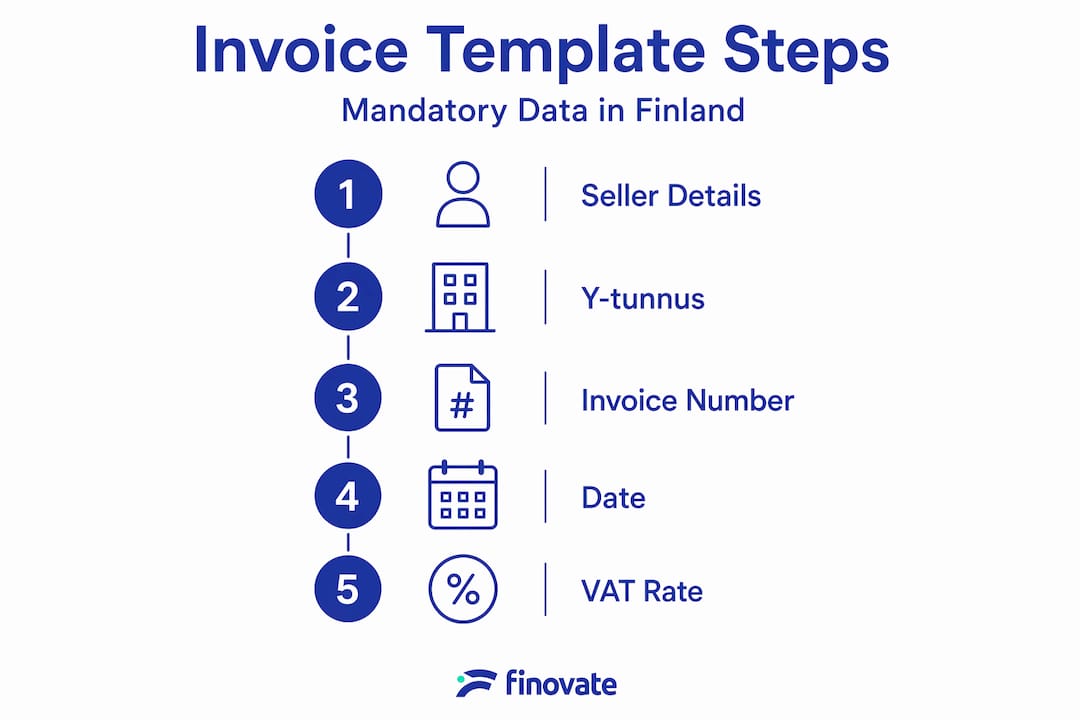
Finnish law sets clear standards for what every invoice must contain. Required invoice fields include the invoice date, a running invoice number, the seller's name and Y-tunnus, the buyer's name and address, a description of the delivered goods or services, the delivery or service date, the applicable VAT rate and VAT amount, the total sum, payment terms, and full payment information including your bank account number and, where relevant, a reference number.
Each field serves a specific purpose. The running invoice number, for example, is not optional formatting; it is a legal requirement that allows both parties and the tax authority to track documents in sequence. Missing this detail alone can cause an invoice to be rejected.
Your Y-tunnus and registration status
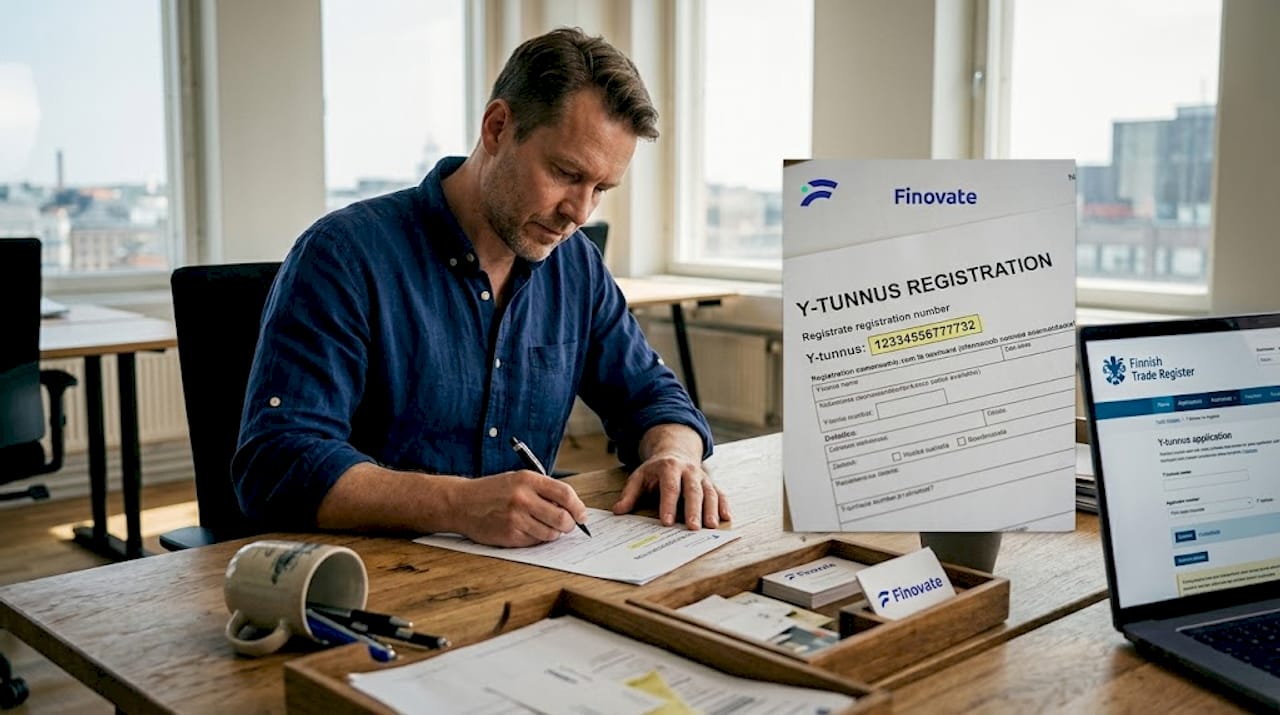
Your Y-tunnus is your Finnish business identifier, issued when you register with the Finnish Trade Register or the tax authority. You cannot legally invoice as a business without one. If you are still in the process of setting up, prioritise registration first. Our guide on accounting services for small businesses explains how registration fits into the broader picture of financial management.
Tools and templates: What to use
You have two main options for producing invoices: manual templates (typically Word or Excel documents saved as PDFs) or dedicated invoicing software. Manual templates are straightforward and low cost, but they require discipline to maintain correct numbering and formatting. Invoicing software automates numbering, calculates VAT, and often integrates with your bookkeeping records directly.
Here is a quick comparison of the two approaches:
| Feature | Manual PDF template | Invoicing software |
|---|---|---|
| Cost | Low or free | Monthly subscription |
| VAT calculation | Manual | Automated |
| Invoice numbering | Manual | Automated |
| Bookkeeping integration | None | Often included |
| Error risk | Higher | Lower |
| Time per invoice | Longer | Shorter |
Common mistakes to avoid at the setup stage:
- Forgetting to include the VAT breakdown separately from the total
- Using a non-sequential or repeated invoice number
- Omitting the service delivery date, which is different from the invoice date
- Leaving out the buyer's full address when invoicing companies
Pro Tip: Set up a dedicated folder or invoicing system on day one, even if you are only sending a handful of invoices per month. Consistent organisation from the start saves significant time when VAT returns or annual accounts are due.
Step-by-step: Building your invoicing workflow
With all prerequisites in place, you are ready to create and deliver invoices that actually get paid.
A good invoicing workflow reduces friction, limits errors, and ensures your clients receive documents they can process without querying. Here is how to build one from scratch.
Step 1: Choose your invoicing method
Your first decision is whether to use PDF invoices delivered by email or structured e-invoices. As invoicing the state explains, you typically have two tracks to decide early: invoice content setup (numbering, VAT, payment terms) and delivery channel setup (PDF or structured e-invoice formats such as Finvoice, TEAPPSXML, or Peppol). Picking the right track reduces back-and-forth and delays in payment processing.
Step 2: Set up your invoice template
Build or configure your template with all mandatory fields pre-populated where possible. Your name, Y-tunnus, bank account, and standard payment terms should already be filled in. Leave dynamic fields such as invoice date, number, buyer details, and line items for each new invoice.
Step 3: Define your numbering sequence
Start at invoice number 1 (or 001 for a cleaner look) and never reuse or skip a number. If you issue a credit note to correct an error, that credit note gets its own number in sequence. Consistent numbering is essential for both tax compliance and clear audit trails.
Step 4: Confirm VAT rates and apply them correctly
Finland operates with a standard VAT rate and reduced rates for specific categories. Check which rate applies to your service or product before finalising your template. Our articles on tax preparation for small businesses and essential tax tips cover VAT application in detail.
Step 5: Deliver and archive
Send the invoice through your chosen channel, keep a copy in your records, and note the payment due date in your calendar or accounting system. Archiving is not optional; Finnish law requires businesses to retain financial records for several years.
Why consider structured e-invoices?
Structured e-invoices, such as those in the Finvoice format used widely in Finland, are machine-readable files rather than PDF images. When you send a Finvoice to another Finnish company, their accounting system can often import it directly, reducing the chance of manual entry errors on their side. This speeds up processing and, in practice, can mean you are paid faster. If any of your clients are public sector organisations, structured e-invoicing may already be a contractual requirement.
Pro Tip: If you regularly invoice larger Finnish companies or public bodies, set up Finvoice capability as early as possible. Many businesses now prefer or require it, and being able to offer it positions you as a professional, reliable supplier.
Understanding VAT, invoicing for light entrepreneurs, and special cases
Beyond the basic workflow, special cases like VAT registration and alternative entrepreneurial models can trip you up if not properly understood.
VAT registration: When it applies
Not every Finnish entrepreneur must register for VAT immediately. If your annual trade income stays below a certain threshold, you may be exempt. However, VAT application for the light entrepreneur model is triggered at €20,000 of trade income per calendar year, and the invoicing mechanics differ because payment flows through the invoicing service company rather than directly to you as an individual.
Even if you fall below the threshold, you can choose to register voluntarily. There are situations where voluntary registration benefits you, particularly if your clients are VAT-registered businesses that can reclaim input VAT.
Key VAT points to keep in mind:
- Always show the VAT rate and the actual VAT amount as separate line items
- If you are VAT-exempt, state this clearly on the invoice and reference the relevant exemption
- Reverse charge rules may apply for cross-border B2B invoicing within the EU
- Check current rates before issuing invoices; VAT rules do change
"Always verify VAT thresholds and registration requirements directly with the Finnish Tax Administration (Vero) or a qualified accountant before issuing your first invoices. Rates and thresholds can be updated, and acting on outdated information carries real compliance risk."
Invoicing as a light entrepreneur
The light entrepreneur model is a popular arrangement in Finland, particularly for freelancers and those testing a business idea without fully registering a company. Under this model, you invoice through a third-party invoicing service, which handles payroll taxes, employee insurance, and other obligations on your behalf. You receive your payment as a salary after deductions.
This arrangement simplifies administration but changes how invoicing works. You create the invoice within the service's platform, the invoicing company issues the actual legal invoice to your client, and they remit your earnings after deductions. Understanding this distinction matters because it affects your bookkeeping, your VAT obligations, and how you report income. Our resource on freelancer accounting in Finland covers these specifics in more depth.
Ensuring payment: Terms, reminders, and managing late payers
Having set up smart invoices, ensure you truly collect what you are owed by tightening your payment terms and follow-up.
Correct invoicing does not guarantee prompt payment. A structured approach to payment terms and follow-up is just as important as the invoice itself.
Setting effective payment terms
The standard payment term in Finland for B2B invoicing is 14 or 30 days, but you can agree on different terms with your clients. Whatever you agree, state the due date explicitly on the invoice rather than just saying "14 days net." A specific date leaves no room for misinterpretation.
Research consistently shows that late payment practices by larger companies are a real concern for Finnish SMEs, with some large firms illegally extending payment terms. Even when your invoices are perfectly correct, clients may not follow agreed or lawful timelines. Your invoicing setup should therefore include enforceable terms and a clear escalation process.
Your step-by-step process for overdue invoices
- Send a payment reminder on the due date or one day after. Keep the tone polite but factual. Reference the invoice number, original due date, and amount outstanding.
- Follow up by telephone if there is no response within five to seven days. A direct conversation often resolves misunderstandings faster than email.
- Issue a formal notice of late payment if payment is not received within a reasonable further period. Under Finnish law, you are entitled to charge late payment interest from the due date.
- Escalate to a debt collection agency or legal process if payment remains outstanding after your formal notice. Document every step of your communication in case this becomes necessary.
Our monthly invoicing service includes support for managing these follow-up processes, which can be particularly useful when you are handling a growing client list.
"In Finland, it is both legally accepted and professionally appropriate to charge late payment interest. Do not feel that doing so damages the client relationship. Setting this expectation from the start, in your contract or in your invoice terms, is the clearest signal that you run a professional operation."
Pro Tip: Include your bank reference number on every invoice. This allows your bank and accounting software to automatically match incoming payments to the correct invoice, significantly reducing the manual work of reconciliation.
Why automation beats manual processes for Finnish SMEs
Once your processes are running, it is worth considering how to raise efficiency further with technology. And our view on this is clear: for the vast majority of Finnish small businesses, continuing with fully manual invoicing is a costly mistake.
We understand the hesitation. Many entrepreneurs assume that invoicing software is expensive, complex to set up, or unnecessary at an early stage. In practice, the opposite tends to be true. The cost of even a mid-range invoicing platform is typically recovered in the first month, simply through time saved and errors avoided.
Manual invoicing invites specific risks that are easy to underestimate. A transposed digit in a bank account number means payment goes to the wrong place. A forgotten invoice number means a sequence gap that requires explanation at tax time. A miscalculated VAT figure may trigger a correction request from the tax authority. Each of these issues takes time and creates stress that could be entirely avoided.
Beyond error reduction, automated invoicing solutions free up time that you can direct towards billable work. For a freelancer billing at €60 per hour, saving just two hours per month on invoicing administration is worth €120 monthly, far more than most software subscriptions cost.
There is also a compliance dimension. Finnish tax requirements around VAT reporting, record retention, and electronic invoicing for public sector clients are not getting simpler. Automation tools designed for the Finnish market build these requirements into their workflows. You are not left guessing whether your invoice format meets current standards.
Our recommendation: review your current invoicing setup honestly. If you are spending more than one hour per week on invoicing administration, or if you have had even a single payment delayed due to an invoice error, the case for switching to a structured, partly automated process is already clear.
Take invoicing further with professional support
Sorting out your invoicing process is a strong first step, but maintaining compliance and optimising cash flow over time requires ongoing attention. That is where professional support makes a real difference.
We work with Finnish entrepreneurs across a range of business models, from sole traders and freelancers to growing SMEs. Whether you operate as a traditional company or under the light entrepreneur model, our team at Finovate can help you set up compliant invoicing, manage your bookkeeping, and ensure your VAT and tax reporting stays accurate. If you are specifically working as a light entrepreneur, our accounting for light entrepreneurs service is designed to cover exactly your needs. Explore our service packages or get in touch to arrange a consultation. We make sure your invoicing works for you, not the other way around.
Frequently asked questions
What invoice details are mandatory in Finland?
Invoices in Finland must include the invoice date, unique number, seller and buyer details, Y-tunnus, description of goods or services, VAT information, total sum, due date, and full payment details including bank account and reference number.
Do I need to charge VAT on every invoice?
If your annual trade income is below €20,000, VAT typically does not apply, but you should always verify the current threshold and rules with the Finnish Tax Administration or a qualified accountant before issuing invoices.
What are structured e-invoices and should I use them?
Structured e-invoices such as Finvoice or Peppol are machine-readable formats that allow your client's accounting system to process the invoice automatically, reducing errors and speeding up payment compared to standard PDF invoices.
How do I handle late payments from clients?
Send a polite but firm reminder on or shortly after the due date, follow up by phone if necessary, and escalate to a formal late payment notice; under Finnish law, you are entitled to charge late payment interest from the original due date.