

TL;DR:
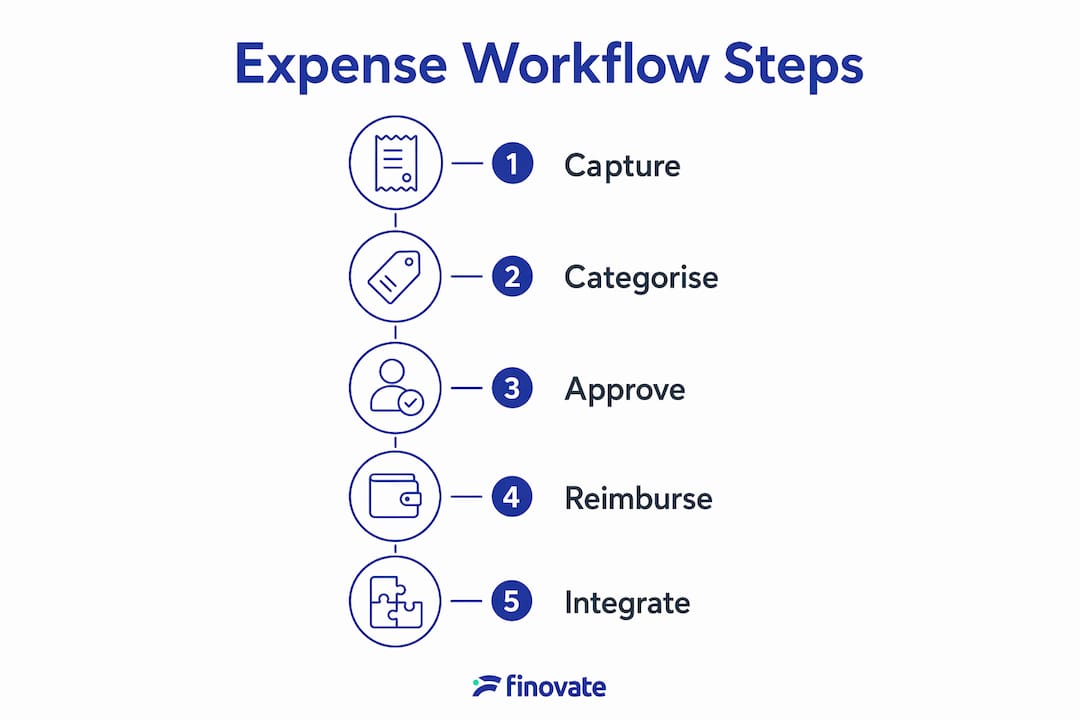
- An effective business expenses workflow involves capturing, categorizing, approving, and reimbursing expenditures accurately and promptly.
- Small Finnish businesses improve financial oversight and compliance by automating receipt data extraction, integrating with accounting systems, and using tiered approval processes.
A business expenses workflow is a structured process that covers the capture, categorisation, approval, and reimbursement of every business expenditure. For small business owners in Finland, getting this process right is not optional. Errors in expense tracking create tax filing problems, audit risks, and cash flow blind spots. Modern tools, including AI-powered OCR (optical character recognition) receipt scanning, have made it possible to automate expense reporting with far less manual effort than even five years ago. A well-built workflow saves time, improves accuracy, and keeps your books tax-ready year round.
What does an effective business expenses workflow require?
The foundation of any reliable expense management process is a clean separation between personal and business finances. Dedicated business accounts are non-negotiable for long-term financial health. Without this separation, reconciliation becomes a time-consuming exercise in guesswork, and your accountant will spend hours untangling transactions that should never have been mixed.
Once your accounts are separated, you need software that can handle the core tasks of the expense management process. The right tool captures receipts, extracts data, categorises spending, and feeds information into your accounting system. AI-powered OCR processes a receipt in under 10 seconds with up to 99.9% accuracy for key data points such as vendor name, date, and tax amounts. That level of speed and accuracy is simply not achievable with manual data entry.
When selecting a tool, look for these feature categories:
- Receipt capture: Mobile scanning, email ingestion, and bank feed integration
- Data extraction: AI or OCR to pull vendor, date, amount, and VAT automatically
- Approval workflows: Multi-stage review from employee submission to finance sign-off
- Accounting integration: Direct sync with bookkeeping and VAT reporting systems
- Reporting and analytics: Real-time dashboards showing spend by category and period
Modern AI expense tracking software costs around $16.65 per month on annual billing. That is a low barrier for a tool that replaces hours of manual work each month.
Pro Tip: Define your spending categories and approval rules before you configure any software. Automation follows the rules you set. If the rules are vague, the automation will be too.
How do you execute a workflow for expenses from capture to approval?
The daily execution of a business expenses workflow follows a clear sequence. Each step builds on the last, and skipping any one of them creates gaps that surface at the worst possible time, usually during tax filing or an audit.
- Capture the receipt immediately. Use a mobile app to scan the receipt at the point of purchase, or forward email receipts to your expense system inbox. Delay creates the risk of lost documentation.
- AI extracts and categorises the data. The system reads the receipt, pulls the vendor name, date, amount, and VAT, and assigns the expense to the correct category based on your pre-set rules.
- The employee submits the expense. The submission includes the categorised entry, the attached receipt image, and any required notes such as project code or business purpose.
- The manager reviews and approves. The system routes the submission to the relevant approver based on amount thresholds or department rules. The approver accepts, queries, or rejects the entry.
- The finance team finalises. Finance checks for policy compliance, confirms VAT treatment, and marks the entry as ready for reimbursement or ledger posting.
- The entry syncs to your accounting system. The approved expense posts automatically to the correct ledger account, with the source document attached.
Treating expense management as a daily framework rather than a tax-period task prevents the backlog that causes costly mistakes. Small business owners who process expenses weekly rather than quarterly report far fewer reconciliation errors and missed deductions.
Pro Tip: Build your approval policy around amount thresholds, not job titles alone. A €50 coffee receipt does not need the same approval path as a €2,000 equipment purchase. Tiered thresholds keep the process moving without sacrificing control.

How does expense integration improve financial oversight?
Integrating your expense workflow with your accounting and VAT reporting systems turns individual transactions into useful financial intelligence. Real-time dashboards and AI analytics allow finance teams to spot trends and anomalies quickly, which directly improves budgeting accuracy and compliance readiness. A dashboard that shows you are overspending on travel in march gives you time to act before the quarter closes.
The integration also handles audit compliance automatically. Every approved expense carries its source document into the ledger. Ledger entries without linked receipts are legally weak in audits. Attaching the original proof at the point of approval removes that risk entirely.
One category that many Finnish small businesses miss is invisible expenses. Cloud infrastructure, SaaS subscriptions, and AI service fees are fast-growing cost categories that traditional tracking methods overlook. These require dedicated tagging rules within your workflow so they appear correctly in your reports and VAT calculations.
| Workflow input | Accounting output |
|---|---|
| Scanned receipt with VAT | VAT-coded ledger entry |
| Approved travel claim | Reimbursement record and cost centre posting |
| SaaS subscription invoice | Recurring digital expense category |
| Bank feed transaction | Matched and reconciled ledger line |
| Payroll expense submission | Payroll cost allocation by department |
This table shows how each input from your expense process produces a specific, traceable output in your accounting records. The connection between the two systems is what makes financial oversight possible in real time.
What mistakes should you avoid in your expense management process?
Most expense management problems come from a small number of recurring errors. Recognising them early saves you from significant problems at year end.
- Missing source documents. An expense without an attached receipt is a liability in any tax audit. Finnish tax authorities expect original proof for every deduction claimed.
- Mixed personal and business spending. Even occasional personal transactions on a business account create reconciliation errors and complicate VAT recovery.
- Late submissions. Expenses submitted weeks after the fact are harder to verify, more likely to be miscategorised, and may miss the relevant VAT period.
- Untracked digital subscriptions. A SaaS tool renewed automatically each month can go unnoticed for quarters if your workflow has no rule to capture it.
- Overcomplicated approval chains. An approval process with four sign-off levels for a €30 expense frustrates staff and causes delays. Complexity without purpose reduces compliance.
Pro Tip: Set a weekly submission deadline for all staff. A fixed rhythm, such as every Friday by noon, creates accountability and prevents the end-of-month pile-up that slows your bookkeeping cycle.
For a practical walkthrough of tracking business expenses from day one, including how to transition away from spreadsheets, the process is more straightforward than most business owners expect.
Key takeaways
A well-executed business expenses workflow connects daily spending to accurate financial records, reduces audit risk, and keeps your VAT reporting clean throughout the year.
| Point | Details |
|---|---|
| Separate accounts first | Dedicated business accounts are the prerequisite for any reliable expense process. |
| Automate receipt capture | AI-powered OCR extracts receipt data in under 10 seconds with up to 99.9% accuracy. |
| Use tiered approvals | Match approval complexity to transaction size to keep the process moving. |
| Integrate with accounting | Syncing expenses to your ledger in real time removes manual posting and audit gaps. |
| Track invisible expenses | SaaS and digital service costs need dedicated tagging rules or they disappear from your records. |
Why I think most Finnish SMEs are still managing expenses reactively
Working closely with small business owners across Finland, I see the same pattern repeatedly. Expenses get recorded when tax season arrives, not when they occur. The result is a frantic reconciliation exercise in january or february, with missing receipts, miscoded entries, and VAT claims that cannot be substantiated.
The shift I advocate is treating your expense workflow as a financial control, not an administrative chore. Assigning ownership for specific spending categories to named individuals, whether that is travel, software, or client entertainment, creates accountability that no software can replicate on its own. When someone knows they are responsible for a category, they submit on time and categorise correctly.
AI tools have genuinely changed what is possible for small businesses. The cost and effort of AI-assisted tracking are now low enough that there is no practical argument for manual spreadsheets. The businesses I see thriving financially are the ones that treat their expense process as a live system, not a quarterly catch-up. The technology is ready. The question is whether you are willing to build the habit around it.
— Busayo
How Finovate supports your expense workflow in Finland
Managing a business expenses workflow well requires both the right tools and the right professional support behind them.
Finovate provides bookkeeping, VAT reporting, payroll processing, and business advisory services to small businesses across Finland. We connect your daily expense records to accurate, compliant financial statements so you are never caught unprepared at tax time. Our team handles the technical side of accounting and tax compliance so you can focus on running your business. Whether you are setting up your first expense process or fixing one that has grown unwieldy, we are here to help you get it right.
FAQ
What is a business expenses workflow?
A business expenses workflow is a structured process covering the capture, categorisation, approval, and reimbursement of business expenditures. It connects daily spending to accurate accounting records and ensures tax compliance.
How do I manage business expenses as a sole trader in Finland?
Open a dedicated business account, use an expense tracking app with receipt scanning, and submit expenses weekly. This keeps your VAT records clean and your bookkeeping straightforward throughout the year.
How accurate is AI receipt scanning for expense tracking?
AI-powered OCR processes receipts in under 10 seconds with up to 99.9% accuracy for key data points including vendor name, date, and tax amounts. That accuracy makes it reliable for VAT recovery and audit compliance.
What happens if I submit expenses without receipts?
Expenses without attached source documents are legally weak in audits. Finnish tax authorities require original proof for every deduction, so missing receipts can result in disallowed claims and penalties.
How often should I process business expenses?
Weekly processing is the standard recommended by finance professionals. It prevents backlogs, reduces the risk of lost receipts, and keeps your monthly accounts accurate without a large time commitment.