

TL;DR:
- Financial management involves strategic planning and control of financial resources to achieve business objectives. It emphasizes cash flow and long-term decision-making rather than just accounting data. Entrepreneurs benefit from implementing disciplined routines like cash flow forecasting and financial analysis to prevent insolvency and support growth.
Financial management is defined as the strategic process of planning, organising, directing, and controlling financial activities to achieve an organisation's objectives. For business owners and entrepreneurs, this means making deliberate decisions about cash flow, budgeting, investing, and financing to keep the business solvent and growing. It is not simply bookkeeping or tax filing. Financial management is the discipline that connects your day-to-day operations to your long-term goals, and understanding it is one of the most direct ways to improve how you run your business.
What is financial management and why does it matter?
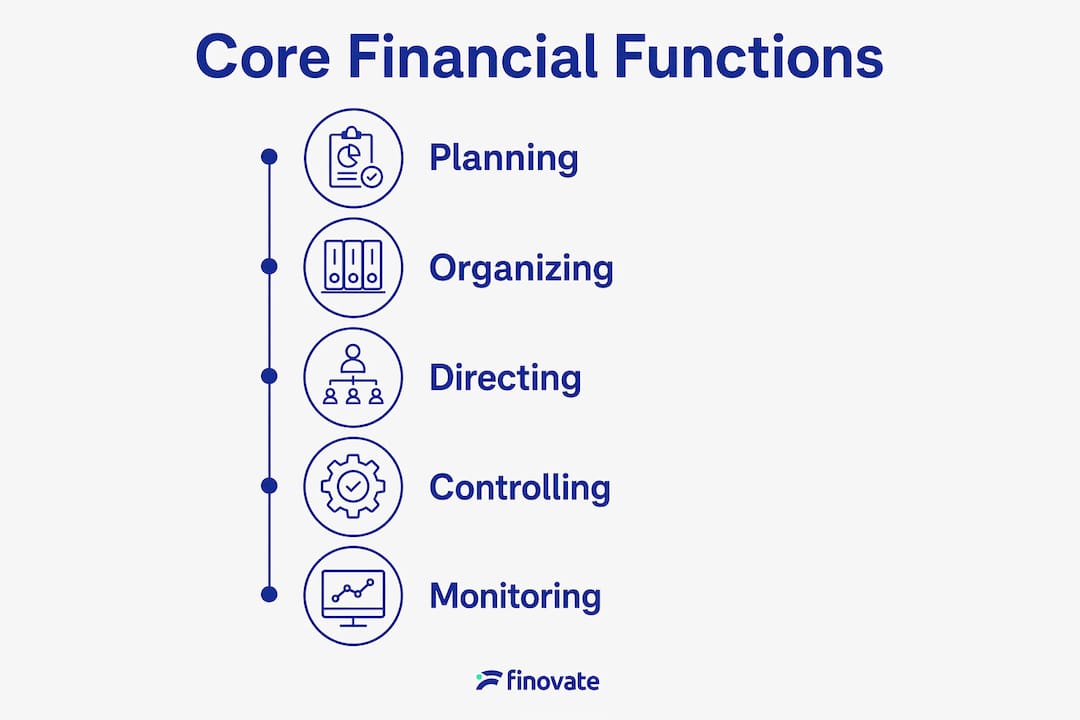
Financial management, in its formal definition, covers the full cycle of acquiring, allocating, and monitoring financial resources within a business. The financial management definition used by most finance professionals includes four core activities: planning, organising, directing, and controlling. Each activity feeds the next, creating a continuous loop that keeps the business financially healthy.
The importance of financial management becomes clear when you consider what happens without it. Businesses that lack structured financial oversight frequently run into cash shortfalls, overspend on low-return activities, or take on debt without a clear repayment plan. A CFO or finance lead in a larger organisation manages this discipline formally, but even a sole trader in Finland benefits from applying the same principles at a smaller scale.
Financial management also differs meaningfully from accounting. Accounting collects and presents financial data; financial management uses that data to make decisions, particularly about cash flow and resource allocation. Your accountant produces the numbers. Financial management is what you do with them. For a deeper look at how these two disciplines interact, see Finovate's guide to accounting services for Finnish businesses.
What are the core functions and principles of financial management?
The core functions of financial management translate directly into the decisions you make every week as a business owner. Financial management involves budgeting, forecasting, cost control, investment choices, and financing via debt and equity. These are not separate tasks. They form an integrated system where each decision affects the others.
The guiding principles behind sound financial management include:
- Risk-return trade-off. Every investment carries risk. The principle states that higher potential returns come with higher risk, and your job is to find the balance that fits your business's capacity and goals.
- Liquidity management. Keeping enough cash available to meet short-term obligations is non-negotiable. A business can be profitable on paper and still fail if it cannot pay its suppliers or staff on time.
- Optimal resource allocation. Capital should flow to its highest-value use. This means regularly reviewing where your money is working hardest and redirecting it when necessary.
- Financial transparency. Clear, accurate financial reporting supports better decisions at every level of the organisation, not just at the top.
Financial management is not solely the finance department's responsibility. Every manager who approves spending, hires staff, or commits to a supplier contract is making a financial decision. Entrepreneurs who understand this tend to build more disciplined teams and avoid costly surprises.
Pro Tip: Set a fixed monthly date to review your profit and loss statement alongside your cash flow statement. Reviewing them together, rather than separately, reveals timing gaps that the income statement alone will never show.

How does financial management address cash flow and working capital?
Cash flow management is the operational heart of financial management for most small businesses. Financial managers focus on cash inflows and outflows to ensure cash is available precisely when payment obligations arise. This is distinct from tracking profit. A business can show a healthy net profit while simultaneously running out of cash, a situation that catches many entrepreneurs off guard.
Working capital is the term for the short-term financial resources a business uses to operate day to day. It comprises four components:
- Cash. The liquid funds available immediately for payments and expenses.
- Inventory. Stock or materials held for sale or production, which ties up cash until converted to revenue.
- Receivables. Money owed to you by customers. The longer your payment terms, the longer your cash is locked away.
- Payables. Money you owe to suppliers. Extending payment terms where possible preserves your cash position.
Insolvency often stems from timing mismatches in cash receipts and payments, not from losing money overall. A construction firm that invoices on project completion but pays subcontractors weekly faces this risk constantly. Forecasting your cash position 8 to 12 weeks ahead gives you time to act before a shortfall becomes a crisis.
Common cash flow pitfalls for entrepreneurs include issuing invoices late, offering payment terms that are too generous, and failing to chase overdue receivables promptly. Finovate's article on entrepreneur finance tips covers practical steps for managing these issues in the Finnish business context.
Pro Tip: Build a simple 13-week cash flow forecast in a spreadsheet and update it every Monday. Thirteen weeks gives you enough visibility to spot problems and enough detail to act on them.
What long-term financial decisions does financial management guide?
Beyond day-to-day cash management, financial management governs the larger decisions that shape a business's future. Long-term decisions involve capital budgeting, capital raising, and dividend policy. These choices determine whether a business grows, stagnates, or takes on unsustainable risk.
Capital budgeting is the process of evaluating which long-term investments, such as new equipment, a second location, or a product line expansion, are worth pursuing. The evaluation considers projected cash returns, the cost of financing, and the risk profile of the project. Entrepreneurs must evaluate investment opportunities considering cash constraints and risk tolerance; a profitable project might still be the wrong choice if the financing costs and cash conversion timeline do not align with the business's current position.
The table below compares the two primary financing routes available to business owners:
| Financing type | Key characteristics | Best suited for |
|---|---|---|
| Debt financing | Fixed repayment schedule, interest costs, no ownership dilution | Businesses with predictable cash flow and clear repayment capacity |
| Equity financing | No fixed repayments, investor shares in profit and control | High-growth businesses willing to share ownership for capital |
Financial managers weigh risk-return trade-offs in every investment and financing decision, balancing profit opportunities against potential losses. Risk factors include market demand, interest rates, and broader economic conditions. Choosing cheaper debt is not automatically safer if the risk attached to the project has not been properly assessed. This is one of the most frequently misunderstood aspects of financial management for beginners.
Contingency planning sits within this long-term framework as well. A business that holds a cash reserve, maintains an undrawn credit facility, or has a documented plan for a revenue downturn is far more resilient than one that operates at full capacity with no buffer.
What practical tools and frameworks support financial management?
Effective financial management relies on a set of tools and governance structures that translate strategy into daily action. CFO-led governance procedures translate organisational objectives into budgets and contingency plans, with teams tracking performance and adjusting as conditions change. For smaller businesses without a dedicated CFO, the owner or a trusted adviser typically fills this role.
The practical toolkit for financial management includes:
- Cash flow statements. These serve as the operating system of financial management, showing exactly when money enters and leaves the business. Reviewing them monthly is the minimum standard.
- Budgeting cycles. An annual budget, reviewed quarterly and updated monthly, keeps spending aligned with revenue and flags variances before they compound.
- Financial planning and analysis (FP&A). FP&A supplies executives with decision-shaping insights through forecasting, scenario modelling, and cross-departmental collaboration. Even a basic version of this, comparing actuals to forecasts each month, improves decision quality significantly.
- Performance metrics. Gross margin, operating cash flow, debtor days, and return on assets are the four metrics most business owners should track consistently.
- Forecasting software. Tools such as Xero, QuickBooks, and Float integrate with accounting data to produce rolling cash flow forecasts without manual spreadsheet work.
Financial management creates transparency and feedback loops from executive strategy to day-to-day operations, improving decision-making across the entire organisation. This alignment means that a sales manager who understands margin targets makes better pricing decisions, and an operations manager who tracks cost variances controls spending more effectively. Financial management strategies, applied consistently, turn financial data from a historical record into a forward-looking guide. For Finnish SMEs looking to build this discipline, Finovate's guide to financial management for SMEs provides a practical starting point.
Key takeaways
Effective financial management requires consistent cash flow monitoring, disciplined budgeting, and deliberate investment decisions aligned with the business's risk tolerance and growth objectives.
| Point | Details |
|---|---|
| Financial management definition | It is the process of planning, organising, directing, and controlling financial resources to meet business objectives. |
| Cash flow over profit | A business can be profitable and still fail; cash timing mismatches are the leading cause of insolvency. |
| Risk-return principle | Every financing and investment decision carries risk; cheaper funding is not safer if the risk is not properly assessed. |
| Long-term decisions matter | Capital budgeting and financing choices shape the business's future; evaluate them against cash constraints and risk tolerance. |
| Tools and governance | Cash flow statements, budgeting cycles, and FP&A frameworks convert financial strategy into daily operational discipline. |
Why financial management is the discipline most entrepreneurs underestimate
I have worked with enough business owners to say this with confidence: most entrepreneurs who struggle financially are not struggling because they lack ambition or work ethic. They struggle because they conflate revenue growth with financial health. The two are not the same thing.
The businesses I see get into serious difficulty are almost always cash-flow problems dressed up as revenue problems. The owner is busy, invoices are going out, clients are paying, and yet there is never quite enough money in the account when it matters. That is a financial management failure, not a sales failure.
What I find most telling is how rarely business owners look at their cash flow statement compared to their profit and loss report. The profit and loss tells you what happened. The cash flow statement tells you what is about to happen. Once you start treating it as your primary management tool rather than an afterthought, your decision-making changes entirely.
The other thing I would push back on is the idea that financial management is something you hand off entirely to an accountant. Your accountant is indispensable for compliance, reporting, and technical advice. But the financial decisions, where to invest, how much risk to carry, when to hire, when to hold back, those belong to you. The role of financial management in a business is ultimately the owner's responsibility, even when supported by professionals.
Build the habit of reviewing your numbers weekly, not monthly. Monthly reviews tell you what went wrong. Weekly reviews give you time to fix it.
— Busayo
How Finovate supports your financial management

Managing your finances well requires more than good intentions. It requires the right support structure. Finovate provides Finnish business owners and entrepreneurs with accounting, bookkeeping, payroll, and tax services designed to give you clear, accurate financial data at all times. Our monthly invoicing service and Invoicing Service Pro are built for SMEs that need consistent, professional invoicing without the administrative burden. We handle the compliance and reporting so you can focus on the decisions that grow your business. Contact Finovate to discuss how our services can support your financial management goals.
FAQ
What is the financial management definition in simple terms?
Financial management is the process of planning, organising, directing, and controlling a business's financial resources to achieve its goals. It covers budgeting, cash flow monitoring, investment decisions, and financing choices.
How does financial management differ from accounting?
Accounting records and presents financial data; financial management uses that data to make decisions. Your accountant produces the numbers; financial management determines what you do with them.
Why is cash flow more important than profit in financial management?
A business can report a profit while running out of cash if the timing of receipts and payments is misaligned. Cash flow management addresses when money moves, not just how much, which is why it is the primary concern of financial managers.
What are the main principles of financial management?
The core principles include the risk-return trade-off, liquidity management, optimal resource allocation, and financial transparency. Together, they guide every significant financial decision a business owner makes.
Do small business owners need formal financial management strategies?
Yes. Even without a dedicated CFO, small business owners benefit from applying financial management principles through regular cash flow forecasting, monthly budget reviews, and disciplined investment evaluation. Finovate's guide to budgeting for Finnish SMEs outlines a practical starting framework.