
TL;DR:
- Proper invoicing is essential for small business cash flow, directly impacting timely payments and financial stability. Accurate, detailed invoices with clear deadlines and automation strategies speed up collection, reduce disputes, and ensure tax compliance processes are straightforward. Consistently managing invoicing as a scheduled task prevents delays, maintains professionalism, and safeguards your business operations.
Proper invoicing is the foundation of small business financial health, directly determining when and whether you get paid. For entrepreneurs managing tight budgets and unpredictable income, a missed or poorly constructed invoice is not a minor administrative slip. It is a direct threat to cash flow. Cash flow problems driven by unpaid invoices are the primary reason small businesses fail. Understanding why proper invoicing matters, and acting on that understanding, is one of the most practical steps you can take to protect your business. Platforms such as QuickBooks and FreshBooks have made professional invoicing accessible to sole traders and growing firms alike, removing the excuse that automation is only for larger organisations.
How does accurate invoicing impact cash flow and financial stability?
The connection between invoicing discipline and financial stability is direct and measurable. When invoices are delayed, vague, or missing altogether, payment timelines stretch, and your ability to cover operating costs shrinks accordingly. This is not a theoretical risk. 56% of small businesses currently have outstanding invoices averaging £17,500, with 47% of those overdue by more than 30 days. That figure represents real money sitting idle while businesses struggle to pay suppliers, staff, and overheads.
The longer an invoice goes unpaid, the harder it becomes to recover. Invoices past 90 days have only an 18% recovery rate. This means that if you allow a payment dispute or oversight to drift for three months, you are statistically likely to write off more than four-fifths of what you are owed. Chasing late payments also consumes time that could be spent on billable work, compounding the loss.
"Unpaid invoices are not just an inconvenience. They are a structural threat to your business's ability to operate."
Clear payment terms and specific due dates are the first line of defence. Invoices that state "payment due within 30 days" are far less effective than those that state a precise date. Clients respond to concrete deadlines. For new client relationships, stricter terms such as net 15 or a deposit requirement reduce your exposure before trust is established. You can read more about sole trader cash flow management to understand how invoicing fits into the broader picture of financial sustainability.
What should a proper invoice include, and what mistakes should you avoid?
A well-structured invoice does more than request payment. It signals professionalism, organisational maturity, and encourages prompt payment from clients. Every invoice you send is a document that represents your business. A poorly formatted or incomplete invoice raises doubts about your reliability before the client has even considered paying.
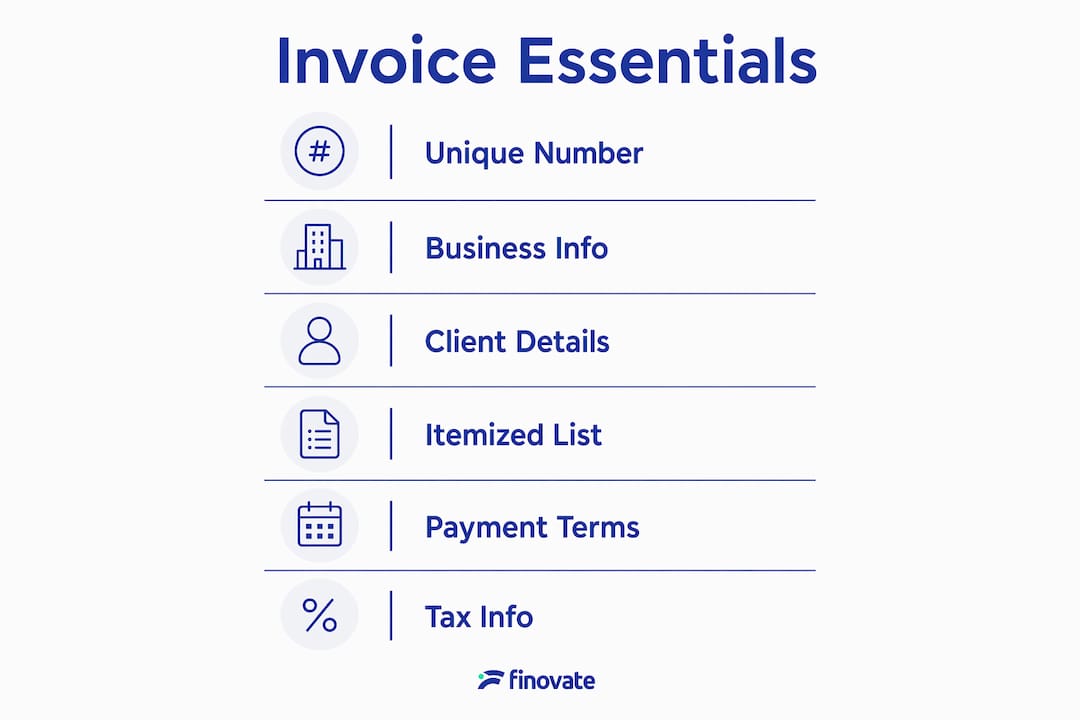
A compliant and effective invoice must include the following:
- A unique invoice number for tracking and reference purposes
- Your business name, address, and contact details, along with the client's full details
- Issue date and payment due date, stated clearly and specifically
- An itemised list of goods or services, with quantities, unit prices, and totals
- Payment terms, including any late payment charges
- Accepted payment methods, such as bank transfer, card, or online payment links
- VAT number and VAT breakdown, if you are VAT-registered
Common mistakes that delay payment include vague service descriptions such as "consultancy work" without specifying what was delivered, missing due dates, incorrect client details that require reissuing the invoice, and failing to state accepted payment methods. Each of these errors creates friction that gives a client a reason, or an excuse, to delay.
Pro Tip: Review your invoice template against this checklist before sending any new invoice. A five-minute check can prevent a 30-day delay.
Clear and detailed invoices prevent ambiguity, reduce disputes, and help businesses maintain good client relationships. When a client can see exactly what they are paying for and how to pay, the path to settlement is shorter. You can explore the different types of accounting invoices to understand which format suits your business model.
How can businesses get paid faster through better invoicing practices?
Speed of payment is not purely a function of client goodwill. It is a function of how well your invoicing process is designed. Several practical adjustments can reduce the average time between invoice issue and payment receipt significantly.
- Invoice immediately upon project completion. Do not wait until the end of the month. Clients are most engaged with the value you have delivered right after the work is done. Delay creates distance.
- Set due dates with a buffer. Setting due dates several days before funds are actually needed accounts for bank processing times and prevents cash shortages. If you need funds by the 15th, set the due date on the 10th.
- Use automated payment reminders. Sending a reminder three days before the due date, on the due date, and three days after is standard practice. Automation removes the personal discomfort of chasing clients and keeps the process consistent.
- Offer multiple payment methods. Multiple payment options and automated reminders drastically improve payment speed and reduce overdue invoices. One-click payment links embedded directly in the invoice remove every barrier between the client and settlement.
- Treat invoicing as a managed lifecycle. A managed invoicing lifecycle with scheduled follow-ups reduces unpaid periods and maintains client relations. Pre-due reminders, post-due follow-ups, and escalation to a phone call when necessary form a structured collection process rather than a reactive one.
Pro Tip: If you use accounting software such as QuickBooks or FreshBooks, activate automatic late payment reminders from the moment you send the invoice. You set it once and the system handles the follow-up.
Using automated payment systems removes personal awkwardness and improves consistent collection processes. This is particularly valuable for small business owners who find chasing payments uncomfortable. The system does it for you, professionally and on schedule.
How does proper invoicing support legal and tax compliance?
Invoices are legal documents, not merely billing tools. Invoices serve as important legal and professional documents that underpin trust and financial order. In the context of tax compliance, a well-maintained invoice record is the difference between a straightforward audit and a costly, stressful one.
For VAT-registered businesses, accurate invoices are the basis for every VAT return. Each invoice must show the correct VAT rate, the net amount, and the VAT amount separately. Errors here do not just delay payment from clients. They create liabilities with HMRC or the Finnish Tax Administration, depending on where you operate. Consistent invoicing systems facilitate tax audits and simplify VAT and year-end accounting preparations.
The table below summarises the key compliance functions that proper invoicing supports:
| Compliance area | How invoicing supports it |
|---|---|
| VAT returns | Itemised VAT on each invoice provides the data for accurate quarterly or monthly returns |
| Income verification | Invoices serve as proof of revenue for tax filings and loan applications |
| Audit readiness | Organised invoice records allow you to respond to HMRC or tax authority requests without delay |
| Year-end accounting | Complete invoice histories reduce the time and cost of preparing annual accounts |
| Legal disputes | Invoices provide documented evidence of agreed terms and services delivered |
If you operate in Finland, understanding the local requirements is particularly important. Finovate's guide on how to set up invoicing in Finland covers the compliance requirements specific to Finnish entrepreneurs. Systematic bookkeeping and invoicing also work together to reduce tax stress. You can read more about how bookkeeping prevents tax stress for a broader view of how these practices connect.
Key takeaways
Proper invoicing is the single most controllable factor in how quickly and reliably a small business gets paid, and it directly determines tax compliance and financial stability.
| Point | Details |
|---|---|
| Cash flow is at risk without proper invoicing | Outstanding invoices averaging £17,500 affect 56% of small businesses, threatening operational continuity. |
| Invoice recovery drops sharply after 90 days | Only 18% of invoices overdue by 90 days are recovered, making timely follow-up non-negotiable. |
| Complete invoice content prevents payment delays | Include due dates, itemised services, VAT details, and payment methods on every invoice. |
| Automation and buffers speed up payment | Set due dates before funds are needed and use automated reminders to reduce overdue invoices. |
| Invoices are legal compliance documents | Accurate invoice records support VAT returns, audits, and year-end accounting with minimal disruption. |
Why I think most small businesses underestimate their invoicing process
After working with entrepreneurs across a range of industries, I have noticed a consistent pattern. Business owners invest significant energy in delivering excellent work, then treat the invoice as an afterthought. They send it late, format it loosely, and feel uncomfortable following up. The result is a gap between the value they deliver and the income they actually collect.
The uncomfortable truth is that your invoicing process is a direct reflection of how seriously you take your own business. Clients notice. A professional, clearly formatted invoice sent promptly after project completion signals that you are organised and expect to be paid on time. A vague invoice sent two weeks late signals the opposite, and clients respond accordingly.
What I have found genuinely effective is treating invoicing as a scheduled, recurring task rather than something you do when you remember. Set a fixed time each week to review outstanding invoices, send reminders, and follow up on overdue accounts. This removes the emotional weight of chasing payments because it becomes routine rather than confrontational. Technology handles the reminders. You handle the exceptions.
The businesses that struggle most with cash flow are rarely the ones with the fewest clients. They are the ones with the least disciplined invoicing habits. Fixing that does not require a large investment. It requires consistency, a solid template, and the willingness to treat payment collection as seriously as the work itself.
— Busayo
How Finovate can support your invoicing and financial management
Managing invoicing alongside bookkeeping, VAT, and tax compliance is a significant administrative load for any small business owner. Finovate offers professional invoicing services designed specifically for entrepreneurs and small businesses in Finland, removing the burden of manual billing and follow-up from your plate.
Whether you need a straightforward monthly invoicing solution or a more advanced service that integrates with your accounting and tax reporting, Finovate has a package to match your workload and budget. Our monthly invoicing service automates the billing process, reduces late payments, and keeps your cash flow predictable. For businesses with higher invoice volumes, our professional invoicing service provides enhanced standards and credibility. You can also explore our light invoicing option if you are just starting out and need a cost-effective entry point. Contact Finovate to discuss which service fits your business best.
FAQ
Why does proper invoicing matter for small businesses?
Proper invoicing matters because it directly controls when you get paid and whether your financial records are accurate enough for tax compliance. Cash flow problems caused by unpaid or delayed invoices are the primary reason small businesses fail.
What happens if invoices are left unpaid for too long?
Invoices overdue by more than 90 days have only an 18% recovery rate, meaning the majority of that income is effectively lost. Prompt follow-up and automated reminders are the most reliable way to prevent invoices from reaching that stage.
What must a compliant invoice include?
A compliant invoice must include a unique invoice number, your business details, the client's details, an itemised list of services or goods, the issue date, the due date, payment terms, and VAT information if applicable.
How does invoicing affect tax compliance?
Accurate invoices provide the documentation needed for VAT returns, income verification, and audit responses. Consistent invoicing systems simplify year-end accounting and reduce the risk of errors in tax filings.
How can I get clients to pay faster?
Send invoices immediately after completing work, set due dates with a buffer before funds are needed, offer multiple payment methods, and use automated reminders. These steps together reduce the average time to payment without requiring you to chase clients manually.